
Not many plant diseases have left a profound mark on human history as the late blight of potatoes. A deadly plant disease that is caused by the destructive oomycete Phytophthora infestans. This pathogen thrives in cool, moist conditions. The disease is famously known to have been responsible for the Irish Potato Famine of the 1840s, which claimed around a million lives. Even in the 21st century, late blight continues to threaten global potato production. Early detection of the disease and the use of disease-resistant varieties are especially important in the fight against this disease
Quick Fact
In 1845, late blight (Phytophthora infestans) of potatoes devastated Ireland’s potato harvest, plunging millions into severe food shortages and triggering the Great Famine. In the same year, about a third of the entire potato crop in Ireland was lost. As a result, 1.5 million lives were lost, and several other millions migrated to other regions.
What causes late blight in Potatoes?
Late blight of potatoes is caused by the oomycete Phytophthora infestans, an organism often described as fungus-like. The disease typically originates from infected seed tubers or, less commonly, from the direct germination of resting oospores present in the soil. Phytophthora infestans thrives under cool, moist conditions, with temperatures between 8°C and 15°C and high levels of precipitation, allowing the pathogen to spread rapidly through fields and cause devastating epidemics.
What are the Symptoms of late blight?
There are many symptoms of early blight. Some are very common, others you really need to pay attention to. The following are symptoms of early blight in potatoes.
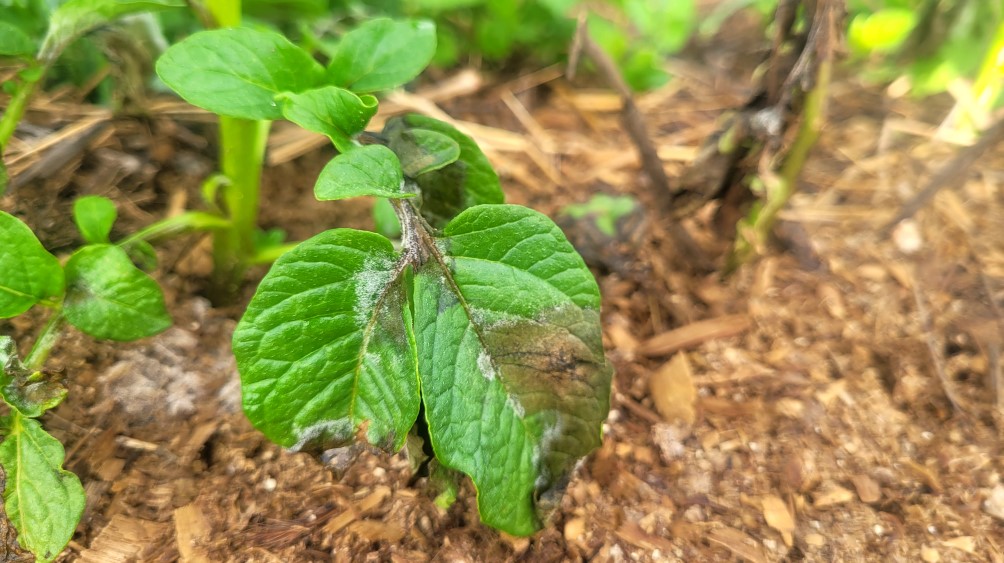
- Small, circular or irregular-shaped water-soaked spots that are green in color. These symptoms first appear at the tips of the leaves or along the edges. This is because these are areas where dew is retained the longest.
- After few days without treatment, the lesions turns to Dark brown or black. These lesions would be surrounded by yellow chlorotic halo.
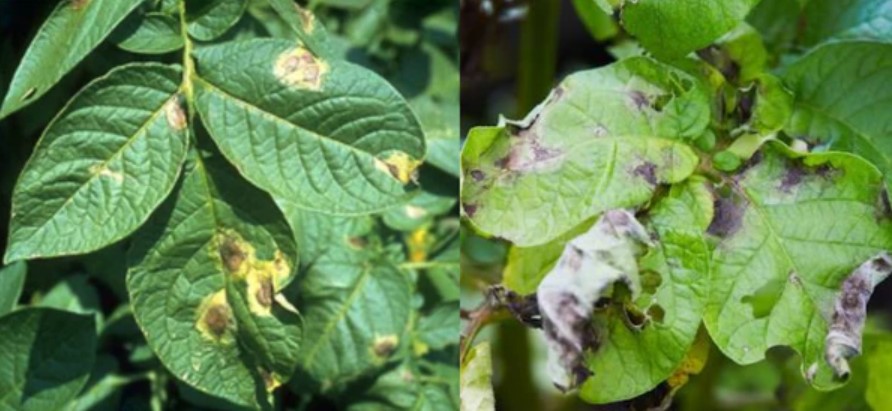
- Entire leaves can become blighted and killed within just a few days.
- white mildew on the edge of the lesions
- A pale green border (sometimes yellow) surrounds the lesions
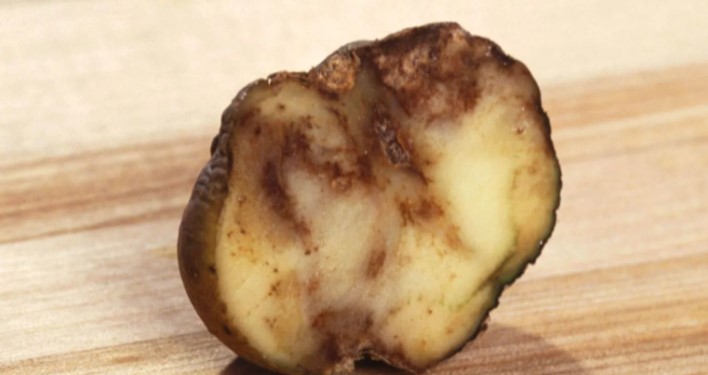
- Red-brown rot under the skin of the potato. The rot increases with the time and degree of infestation.
- Here’s a nicely rewritten version:
- Tuber Lesions. On infected potato tubers, late blight produces dark, firm, and irregularly shaped lesions that quickly render the tubers inedible and unsuitable for market.
Related: Early Blight of Tomatoes
How to distinguish Late Blight from Early Blight.
Distinguishing late blight from early blight in potatoes relies on observing leaf, stem, and tuber symptoms, environmental conditions, and disease progression. Here are some practical examples
1. On Leaves
- Early Blight: Symptoms first appear on older, lower leaves. Lesions begin as small, dark brown to black spots that expand into circular or angular shapes. They develop a distinctive “target” or bull’s-eye appearance with concentric rings of raised and depressed tissue, often surrounded by a yellow halo. Spots remain relatively dry and papery.
- Late Blight: Lesions can appear on leaves of any age and often start as small, pale green to dark green water-soaked spots that rapidly expand into large, irregular brown to purplish-black areas. Infected areas collapse quickly, and whole plants or sections may wilt and die with a characteristic decaying odor.
2. On Stems and Petioles
- Early Blight: Produces elongated, dark brown to black lesions, often superficial.
- Late Blight: Causes dark, firm, water-soaked streaks or large brown patches that can girdle stems quickly, leading to collapse of the plant above the infection.
3. On Tubers
- Early Blight: Lesions are circular to irregular, slightly sunken, dark brown to black with a raised purple or dark border. The internal tissue is dry, leathery, and corky brown (no soft rot unless secondary infection occurs).
- Late Blight: Tuber symptoms show irregular, slightly depressed areas with reddish-brown to purplish skin discoloration. Internally, there is a firm, reddish-brown granular rot that can extend irregularly into the flesh; it may turn soft and smelly if secondary bacteria invade.
4. Environmental and Progression Clues
- Early Blight favors warmer temperatures (around 24–29°C / 75–85°F) with high humidity and often appears mid-to-late season on stressed or aging plants.
- Late Blight thrives in cool, wet weather (10–18°C / 50–65°F with high humidity or rain) and spreads explosively, often destroying foliage rapidly. It can appear earlier in the season under favorable conditions.
Prevention Measures
To prevent the disease is far more effective than trying to cure an active outbreak. The measures below will prove helpful for any organic gardener who does not want to loose her crop.
- Use disease-free potato seeds
- Make sure to destroy any volunteer plants and some weeds like nightshade.
- Water at the base of the crop and avoid overhead watering practices especially at night
- Feed your soil enough for a strong crop to avoid it from infestation.
- Try to Choose and plant resistant varieties.
- Apply lactobacillius, baking soda or any organic fungicide for protective strategies.
- Destroy infected plants as soon as you discover the disease.
- Remove volunteer potatoes as they can be used to spread the disease.
- Earthing up your potatoes helps to provide protection to the tubers from the late blight spores washed down from the leaves.
- Crop rotation. Rotate potatoes and other solanaceous crops with non-hosts like legumes
Organic Treatments
1. Baking Soda Spray:
Baking soda (sodium bicarbonate) works by raising the pH on the leaf surface, creating an alkaline environment that inhibits spore germination and fungal growth of late blight. Dissolve 1–3 tablespoons of baking soda in 1 gallon (about 3.8 liters) of water, then add 1 tablespoon of vegetable oil or neem oil and a few drops of liquid soap as a surfactant to help the mixture stick and spread evenly on the leaves. Shake well, then apply as a foliar spray.
2. Lactobacillus serum
Lactobacillus serum AKA LAB, a fermented beneficial bacteria culture often made from rice wash and milk, acts as a biocontrol agent by producing organic acids and antimicrobial compounds that suppress Phytophthora infestans while promoting beneficial microbes on leaves and in the soil that compete with pathogens. Apply as a foliar spray to thoroughly coat all plant surfaces, or as a soil drench around the base of potato plants, ideally in the early morning or evening.
3. Compost Tea
Compost tea, brewed from well-aged, high-quality compost, delivers beneficial microbes, nutrients, and compounds that colonize leaf surfaces to outcompete or antagonize late blight pathogens while boosting plant vigor and inducing resistance.
4. Neem Oil:
Neem oil, extracted from the neem tree, provides mild antifungal and antispore activity against late blight by disrupting the pathogen’s life cycle and forming a protective coating on leaves, while also offering secondary pest control benefits.
5. Copper-based fungicides:
Copper-based fungicides (such as copper hydroxide) act as a protective barrier on plant surfaces, releasing copper ions that inhibit spore germination and kill Phytophthora infestans on contact, making them one of the few reliable organic-approved options for late blight.
Conclusion
In conclusion, late blight of potatoes remains the most destructive plant disease, which threatens food security and farmers’ livelihoods around the globe. Late blight spreads very fast under cool and moist conditions. Effective control relies on an intentional prevention approach that includes the use of resistant potato varieties, proper field sanitation, timely use of organic fungicide, and regular crop monitoring. By understanding the disease and adopting proactive management strategies, organic farmers can significantly reduce losses and ensure healthy and sustainable potato production.
1 thought on “Late Blight of Potatoes.”