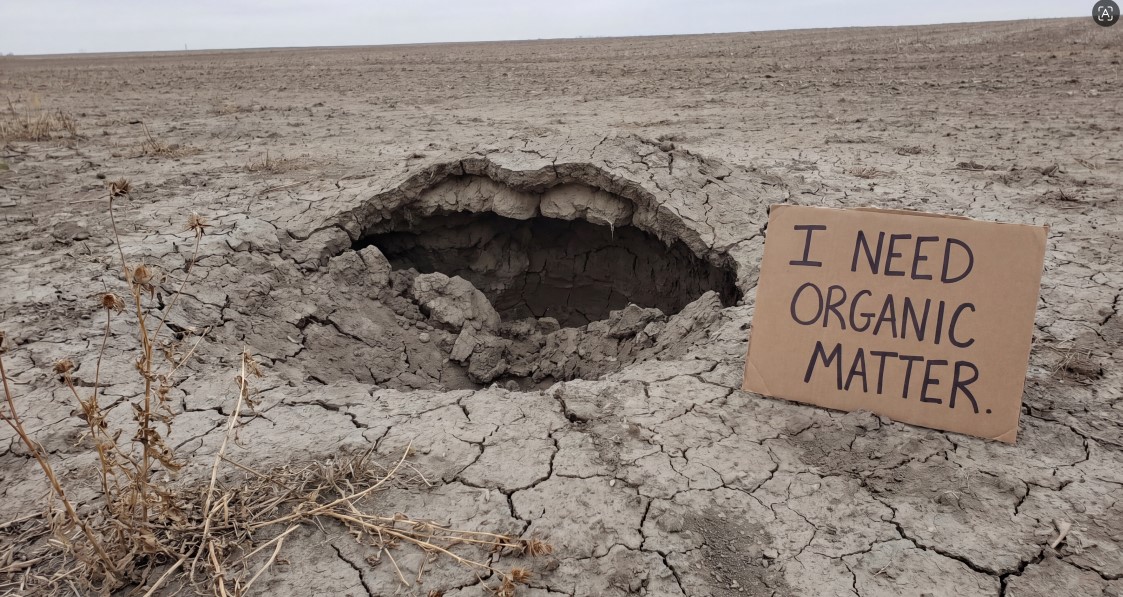
You water your garden regularly. You fertilize enough. You chose a suitable location for your garden. But your plants are not healthy; they look tired and grow slowly. They refuse to thrive. The problem may not be what you’re adding to your soil; it is more likely what’s missing from it.
Organic matter is the most important part of a healthy garden soil. It feeds millions of microorganisms in the soil that make nutrients for plants. Organic matter also improves water retention, prevents soil compaction, and provides a crumbly texture that roots love. When the organic matter is depleted, organic gardeners will always struggle.
Choosing the best organic fertilizer for your vegetables is one of the fastest ways to restore organic matter and bring your soil back to life.
Why Does Organic Matter Matter So Much?
Soil organic matter consists of once living plants or animals that have decomposed. They include animal manure, litter from fallen leaves, compost, and dead microorganisms. A Healthy garden soil contains at least 3% and up to 6% organic matter by weight. If your soil has less than 3%, then it’s in a bad state.
The following are the signs that your soil is crying for organic matter.
1. Your Soil Turns Hard When It Dries
If your soil becomes very hard during the dry season and very sticky and waterlogged during rain or when watering, then it clearly lacks enough organic matter in your soil.
A Healthy soil with sufficient organic matter will stay workable across a range of moisture conditions. It will drain the excess water easily while holding onto the moisture that the plants need. Soil with inadequate organic matter will entirely lose this balance.
How to fix. Start applying about a 2-inch layer of compost and increase it constantly to 6 inches. Repeat the application every season for continuous building of the soil.
2. Water Puddles on the Surface
Have you noticed water sitting on the soil surface for 10 or more minutes before it soaks in? If you have, then this is a sign of poor soil structure, which is caused by inadequate organic matter in the soil.
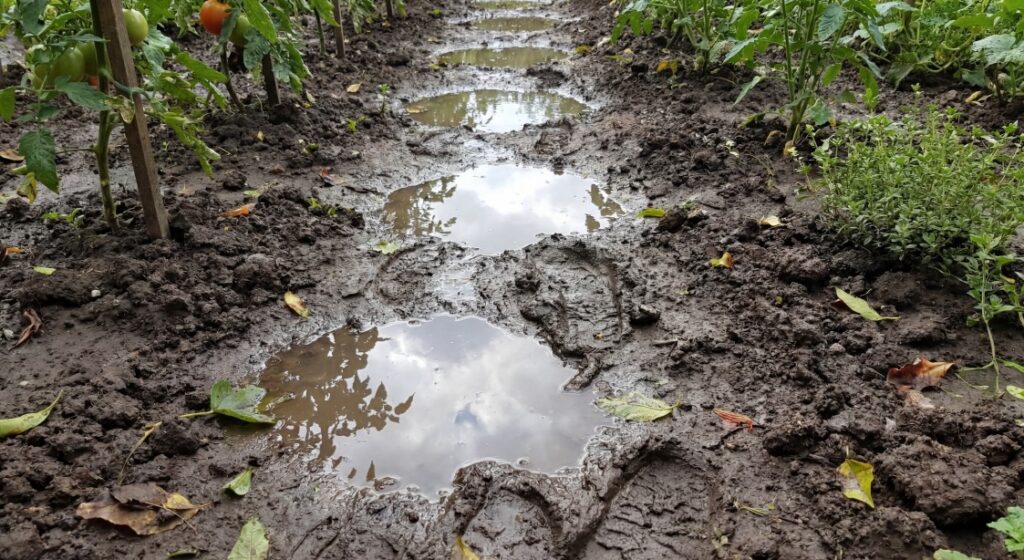
Enriched soil with sufficient organic matter is porous and well-aggregated. When organic matter is depleted, soil structure changes. The soil pores close up, and the surface effectively becomes nearly waterproof.
How to fix this? Add compost and incorporate coarse organic materials such as straw into compacted areas. These materials create macro-pores that improve the drainage almost immediately. The compost will help rebuild long-term soil structure.
3. No Earthworms in the Soil
Dig a hole at any spot in your garden and count the earthworms you find. If your soil is healthy, then you will find a proportionate number of worms in the soil. If you find none, then your soil is seriously poor.
Earthworms are active contributors to soil health. Their burrowing forms channels for water and air movement in the soil, their castings are nutrient-rich and full of beneficial microbes, and their presence is evidence of a thriving underground food web. Research has shown that soils deprived of earthworms show increased compaction, lower soil moisture, and reduced water infiltration rates.
How to fix. Apply lots of compost and organic matter, stop tilling, and apply mulch to your soil surface with organic materials. The worms will come once you make the conditions favourable for them.
4. Your Soil Is Dusty and Sandy-Looking
Rich and healthy soil is dark brown or near-black in color. Light brown, grey, or dusty soil almost always lacks enough organic matter.
The dark pigmentation of healthy soil comes from humus, a long-lasting component of decomposed organic matter. Humus has a massive surface area that attracts and holds water and nutrient ions close to plant roots rather than leaching away during rain season.
How to fix: Adding Compost to your soil is the fastest way to add humus.
5. Stunted Plants or Yellow
You’ve applied your fertilizer and watered sufficiently on a regular basis, but your crops are not growing. They are stunted: small and yellow. If you see anything like this, just know that your soil lacks essential organic matter.
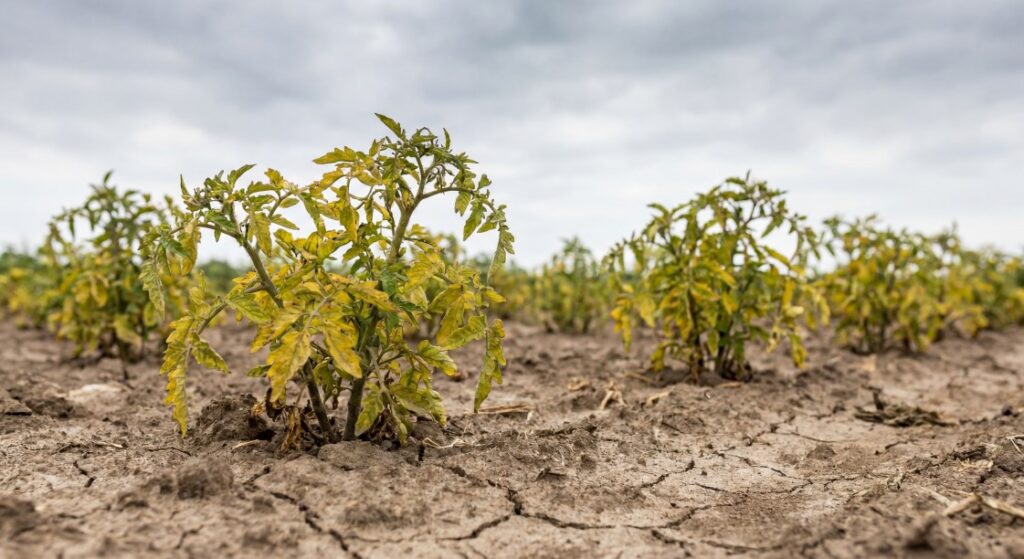
Plants are made to absorb nutrients that are dissolved in soil water and delivered to the roots. When the microbial activity is missing, many nutrients remain chemically locked in forms that roots cannot absorb. Inorganic fertilizers can temporarily bypass this problem but without organic matter to sustain microbial life and soil structure, fertilizer use becomes dependent: you will keep adding more and more to maintain the same results, while the microbial activity declines.
How to fix. Incorporate enough compost into your beds and top-dress with worm castings
6. Your Soil Dries Out Extremely Fast
Are you watering constantly, but the soil is dry again and again within a day or two? Do the top few centimeters of soil in your beds feel dry while the deeper soil is hardly moist?
The problem is likely to be the amount of organic matter, which is very Low. As noted earlier, organic matter is good for holding water. Each increase in organic matter increases the amount of water that the soil is able to hold.
How to fix this: Add aged manure. Cover your soil surface with 3–4 inches of organic mulch to reduce evaporation and keep moisture for a long time.
How to Add Organic Matter
Once you’ve managed to identify the signs that your soil needs organic matter, start to rebuild your soil using the following practical ways to amend your soil.
| Amendment | Best For | Application Rate | Notes |
|---|---|---|---|
| Finished compost | All soils, all situations | about 3 inches per season | The most safe option |
| Aged manure | Sandy soils and heavy feeder crops | About 2 inches per season | Must be fully composted |
| Worm castings | Container gardens, transplants | Light topdress or mix in at planting | Excellent microbial boost |
| Straw mulch | Weed suppression | About 4 inches on the surface | Does not mix into soil — stays as mulch |
| Wood chips (aged) | Pathways, perennial beds | About 4 inches of surface only | Do not till fresh wood chips into soil |
Frequently Asked Questions
Can I have too much organic matter?
It is not easy to over-apply finished compost in your garden. However, very high organic matter soils can produce excessive nitrogen release, leading to lush leafy growth (vegetative crops love this) at the expense of fruiting. Apply at recommended rates and test periodically.
How fast can I reclaim the depleted soil?
If you’re consistent in adding compost and organic mulch, you can typically see significant improvements within one to two seasons. To fully restore your soil, you may need about 3 years of dedicated management. You may see significant improvement after the first year.
Conclusion
Your soil will always tell you what it needs. Hard, lifeless soil that dries very fast, drains too slowly, and grows plants poorly despite fertilizing is a soil that has been depleted of its most important ingredient.
Adding organic matter consistently is your solution. Feed the invisible ecosystem beneath your feet, and it will feed your garden for years to come.
4 thoughts on “6 Signs Your Garden Soil Needs Organic Matter (And What to Do About It)”