
Every organic gardener knows that the secret to an abundant harvest isn’t found in the seed catalog but six inches underground. Healthy soil is the foundation of everything we grow. Do you then wonder why many gardeners chase high yields by adding more water or more plants while neglecting the most powerful lever they have?
If you’re ready to take your harvests to the next level, organic soil amendments are your best answer. These are natural inputs derived from plants, animals, and minerals. And they help rebuild your soil from the ground up, creating the conditions that are suitable for your crops to thrive.
In this article, we’ll cover the 8 best organic soil amendments available to you right now, how each one works, how to apply them correctly, and how to combine them for optimum results.
The 8 Best Organic Soil Amendments for Vegetables
1. Compost Application
If there is one amendment that every organic gardener should be applying, it is compost. No other input that delivers as many broad benefits for every dollar spent.
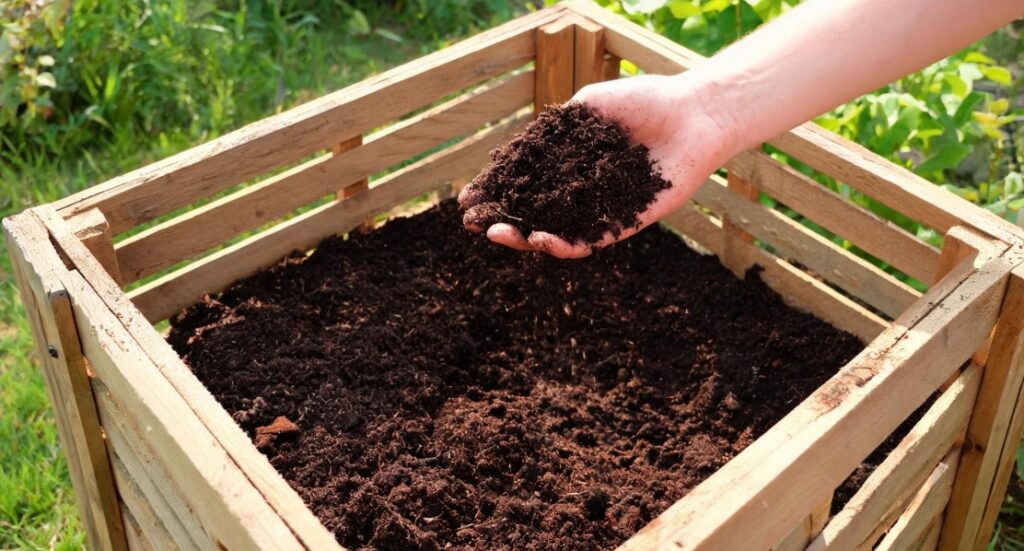
Compost is simply decomposed organic matter from your kitchen scraps, leaves, and animal manure that has been broken down by microbes into a stable, nutrient-rich material. It improves the quality of your soil, including the soil structure, drainage, nutrient availability, PH and microbial diversity
How does Compost Help Amend the soil?
Compost helps to amend the soil in the following ways
- It adds organic matter that feeds the soil food web
- Improves drainage in clay soils
- Improves water retention in sandy soils
- Slowly releases nutrients like nitrogen, phosphorus, potassium, and dozens of trace minerals into the soil
- Introduces and encourages billions of beneficial microorganisms in the soil
We’ve written a detailed article about 6 Signs Your Garden Soil Needs Organic Matter (And What to Do About It) — check out our post here
2. Adding Animal Manure
Animal manure has been used for centuries to fertilize crops for a good reason: it works. Chicken, cow, horse, rabbit, and sheep manure all deliver significant quantities of nitrogen, phosphorus, and potassium alongside a wide range of micronutrients.
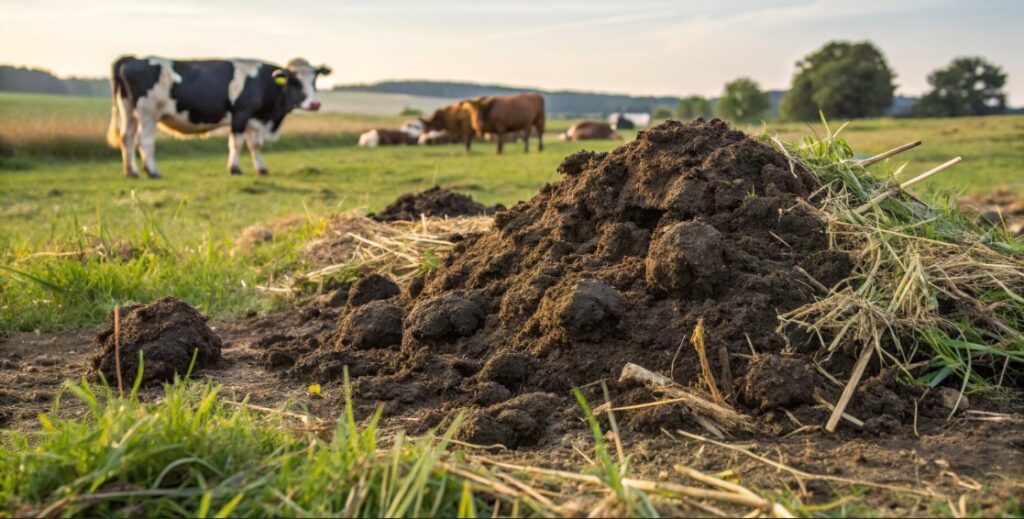
Fresh manure is high in ammonia and other pathogens that can burn and kill plant roots and contaminate vegetables. Well—aged manure— composted for at least 90–120 days— transforms into a safe and highly effective amendment.
The following shows the nutrient composition of the animal Manure in the order NPK
| MANURE TYPE | Nitrogen (N) | Phosphorus (P) | Potassium (K) | Comment |
| Chicken Manure | 3 | 2.5 | 1.5 | Great for Leafy crops |
| Cow Manure | 0.6 | 0.4 | 0.5 | Excellent all purpose |
| Horse Manure | 0.7 | 0.3 | 0.6 | Good Soil structure builder |
| Rabbit Manure | 2.4 | 1.4 | 0.6 | Its cold manure |
Rabbit manure is considered “cold” manure because it has a lower ammonia content, meaning it can be applied directly around plants without burning them.
3. Worm Castings — Nature’s Most Concentrated Soil Builder
Worm castings are the digested organic matter from earthworms. Gardeners often call them “black gold” because they are among the most nutrient-dense, biologically active soil amendments available to organic farmers.
Research shows that earthworm castings are loaded with nitrogen, phosphorus, potassium, iron, calcium, sulfur, and humic acid. These nutrients are perfectly balanced, water-soluble, and immediately available to plants. One of the best benefits is that they release their nutrients slowly enough that they won’t burn roots even at high application rates.
What Really makes worm castings exceptional:
- They contain beneficial bacteria, fungi, and enzymes
- They have humic and fulvic acids that help improve nutrient uptake
- They help improve soil structure and soil water retention
- It suppresses certain soil-borne diseases through some microbial activity
- Will not burn seedlings, even at high application rates.
4. Biochar
Biochar is a stable, low-contamination form of carbon produced by burning agricultural and forestry biomass waste in a low-oxygen environment, which safely sequesters carbon, emits minimal fumes, and enables the capture of clean energy, while being more efficient than ordinary charcoal.
The extensive network of pores creates a large surface area suitable for the habitat of beneficial microorganisms and for storing nutrients and water. When applied correctly, biochar can greatly improve the long-term productivity of your poor soils.
What are the Key benefits of Using Biochar
- Has a good water and nutrients retention capacity.
- Creates micro-habitats for beneficial bacteria and fungi
- It is a good sequester of carbon, contributing to climate resilience
- Helps to balance the soil pH
- Helps to Improve aeration in compacted soils
5. Bone Meal (High Phosphorus for Roots and Fruit)
Bone meal is finely ground animal bones from cattle or poultry processing. It is one of the few organic amendments with the highest phosphorus content, the nutrient most responsible for healthy, strong roots and fruit formation in vegetables.
A lack of Phosphorus in your soil will significantly reduce yields of tomatoes, peppers, eggplants, and root vegetables like carrots, beets, and radishes. With Inadequate phosphorus, plants may grow leafy but produce disappointing fruit. Use bone meal to correct this
Bone meal has the following benefits
- Better Tomatoes, peppers, and squash and all fruiting vegetables
- Helps Root crops to stimulate deep, strong root growth
- Helps Transplants to establish quickly
Note that over-application can lock out other nutrients, such as iron and zinc.
6. Kelp Meal
Kelp meal is a dried and ground seaweed. It is most often harvested from Ascophyllum nodosum. Its NPK ratio is modest at around 1-0-2. It delivers something more than any other amendment.
In addition to 3 major nutrients, Kelp contains over 70 trace minerals, vitamins, and amino acids. It also contains natural plant hormones, such as cytokinins and auxins, that stimulate cell division, root development, and stress tolerance. Gardeners who have used kelp often notice more vigorous plants that are more resistant to drought and produce higher-quality fruit.
Benefits of kelp meal:
- Delivers many trace minerals missing in depleted soils
- Natural cytokinins which help stimulate growth and increase stress resistance
- It improves seed germination rates
- It’s a great feed for soil microbes
- Pairs well with compost
For a deep dive into liquid soil teas and foliar feeding, see our article on How to Make Organic Fertilizer with Comfrey
7. Fish Emulsion and Fish Meal
Fish-based amendments, such as emulsion and meal, are among the best sources of fast-release organic nitrogen available to farmers. It has an NPK ratio of roughly 4-4-1. Fish emulsion is particularly useful early in the season when you need to jumpstart cool soil and get transplants growing quickly.
Unlike synthetic nitrogen, fish-based fertilizers deliver calcium, sulfur, magnesium, and trace minerals. The proteins in fish meal feed soil microbes as they break down, delivering a secondary wave of slow-release nutrition even after the initial boost.
When is it Best for applications:
- It’s best for an early-season boost
- Mid-season feeding for heavy feeders like corn
- It’s a good Foliar spray to correct nitrogen deficiency
- Transplant watering-in solution to reduce transplant shock
8. Green Manures and Cover Crops
The final amendment on our list is Cover crops, also called green manures. These are plants grown specifically to be cut down and incorporated into the soil before the next crop goes in.
Leguminous cover crops such as soybeans, beans, hairy vetch, and field peas fix atmospheric nitrogen through their root nodules, delivering free nitrogen to the soil. Non-legume cover crops like buckwheat, oats, and radishes break up compaction, suppress weeds, feed soil microbes with root exudates, and add bulk organic matter when turned under.
Conclusion
The best organic soil amendments are not magic bullets. They are inputs into a living system, and their power is multiplied by how thoughtfully and consistently you apply them. Start with a soil test. Build your amendment stack from compost, worm castings, and cover crops as your foundation. Layer in bone meal, kelp, fish emulsion, and biochar as targeted tools for specific needs and goals.
1 thought on “8 Best Organic Soil Amendments to Double Your Vegetable Yield This Season”