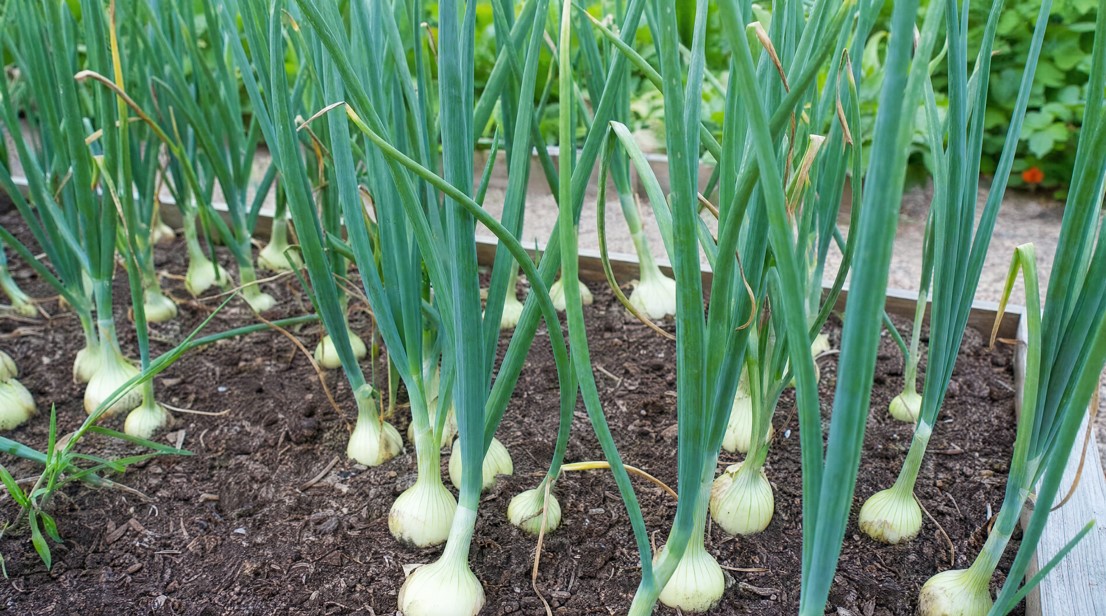
Organic onion farming offers satisfactory yields and flavorful bulbs when done right, but many growers encounter frustrating setbacks. Onion farming mistakes often stem from misunderstanding the crop’s specific needs for soil, light, water, and nutrients. In this guide, I will explore the most frequent pitfalls, with a special focus on why my onions are not bulbing and on organic onion-growing problems, providing practical, chemical-free solutions for success.
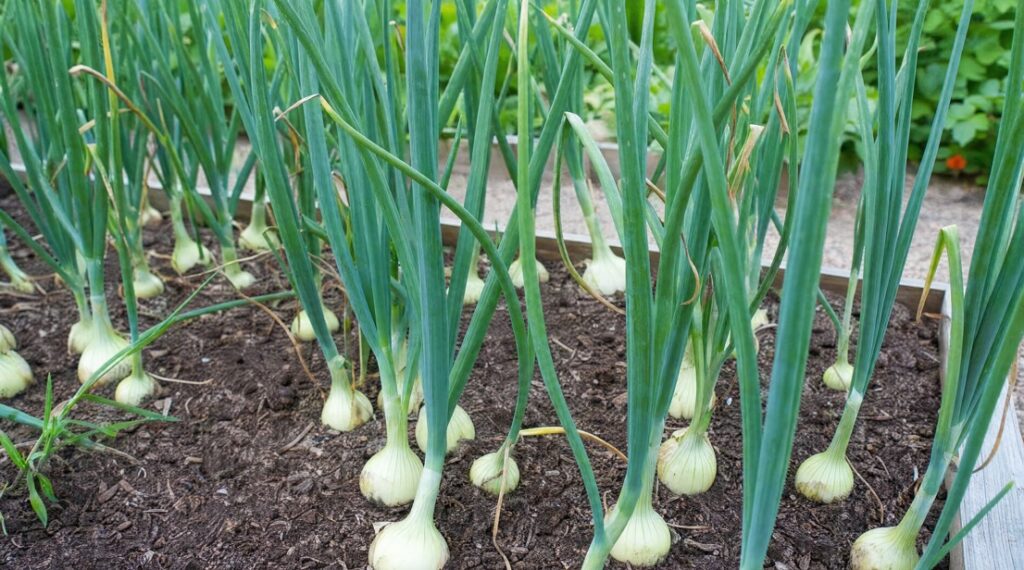
Whether you’re a backyard gardener or scaling up a small farm, avoiding these errors can transform your harvest. We’ll cover everything from variety selection to harvest and storage, drawing on proven organic practices.
1. Choosing the Wrong Onion Variety for Your Climate
One of the top onion farming mistakes is planting varieties mismatched to your daylight hours and latitude. Onions are classified as short-day, intermediate-day, or long-day based on when they initiate bulbing.
Short-day onions (10-12 hours of daylight) suit southern regions, while long-day types (14+ hours) thrive in northern areas. Planting the wrong type leads directly to why are my onions not bulbing—plants produce lush tops but no sizable bulbs.
Types of onions and the areas where they thrive.
| Onion Type | Daylight Needed to Bulb | Latitude Range | Regions Where They Thrive |
|---|---|---|---|
| Short-Day | 10–12 hours | Roughly 0°–30°N/S (equatorial/tropical belt) | Southern US (Texas, Georgia, Louisiana, Florida, Southern California), Mexico, Central America, Caribbean, most of South America (Brazil, Peru, Colombia, Ecuador), Central Africa (DRC, Kenya, Nigeria, Ghana), North Africa (Egypt, Morocco, Algeria — lower latitudes), Middle East (Southern Arabian Peninsula), South Asia (Southern India, Sri Lanka), Southeast Asia (Thailand, Vietnam, Philippines, Indonesia), Northern Australia (Queensland, Northern Territory) |
| Intermediate-Day | 12–14 hours | Roughly 30°N/S–40°N/S | Central/Southern US (Kansas, Missouri, Virginia, North Carolina), Northern Mexico, Southern South America (Central Chile, Central Argentina, Uruguay), Southern Africa (South Africa’s interior, parts of Namibia and Botswana), Mediterranean Europe (Spain, Southern Italy, Southern France, Greece, Turkey), Middle East (Iran, Iraq, Israel), Northern India, Central China, Central Japan, Central Australia (New South Wales, parts of South Australia) |
| Long-Day | 14–16 hours | Above ~40°N/S | Northern US (Washington, Minnesota, Michigan, New England), Canada, UK and Ireland, Northern Europe (Germany, Netherlands, Belgium, Poland, Scandinavia), Russia, Northern China (Manchuria), Northern Japan (Hokkaido), Southern Australia and Tasmania, Southern New Zealand, Southernmost South America (Patagonia) |
Solution: Research your zone and select appropriate varieties. For organic growers, source certified organic seeds or sets from reputable suppliers. Check out our complete guide to organic onion growing for variety recommendations tailored to different regions.
Sometimes you may need to test small plots initially to confirm what performs best locally.
2. Poor Soil Preparation and Nutrient Management
Onions thrive in well-drained, fertile soil rich in organic matter with a pH of 6.0-7.0. Heavy clay or compacted soil causes waterlogging, root rot, and stunted growth.
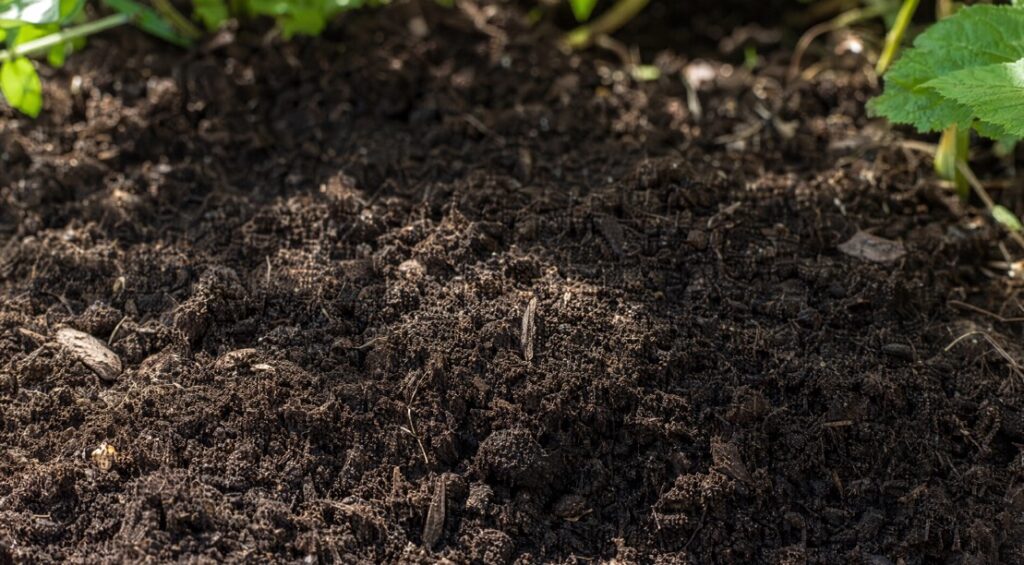
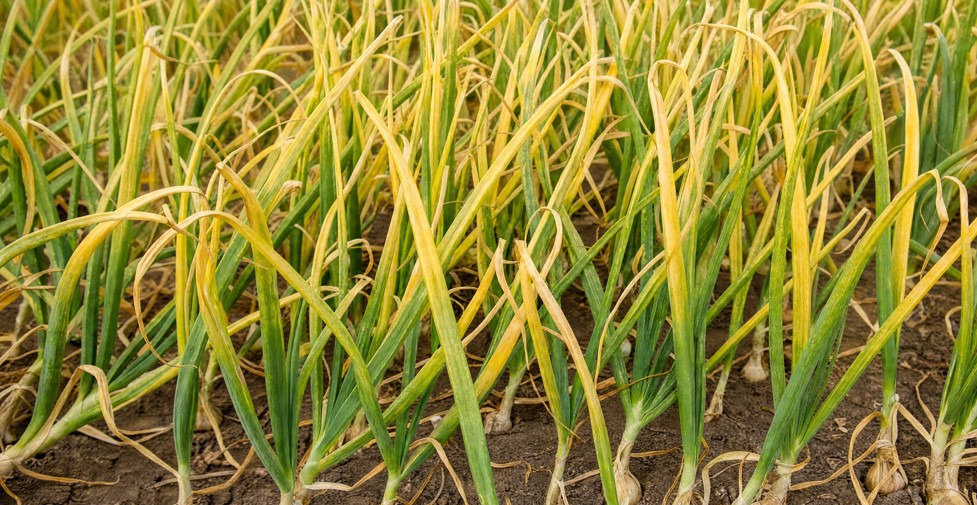
Failing to amend the soil adequately is one of the most common onion farming mistakes that most organic farmers overlook. Nitrogen deficiency will lead to yellowing leaves, while excess nitrogen will promote foliage at the expense of bulbs.
How to Avoid: Make sure to incorporate compost, well-rotted manure, or organic amendments like bone meal. Make all efforts to rotate crops as a nutrient depletion prevention measure. Explore our article on the best organic soil amendments for detailed recipes.
For phosphorus and potassium, rely on rock phosphate and wood ash sparingly. Mulching with straw conserves moisture and suppresses weeds without synthetic inputs.
3. Incorrect Planting Depth, Spacing, and Timing
When you plant too deep, you bury the developing bulb, leading to small or deformed growth. Onion transplants placed too shallow always expand easily and dry out easily. When you overcrowd your onion seedlings, you restrict bulb expansion and increase disease risk.
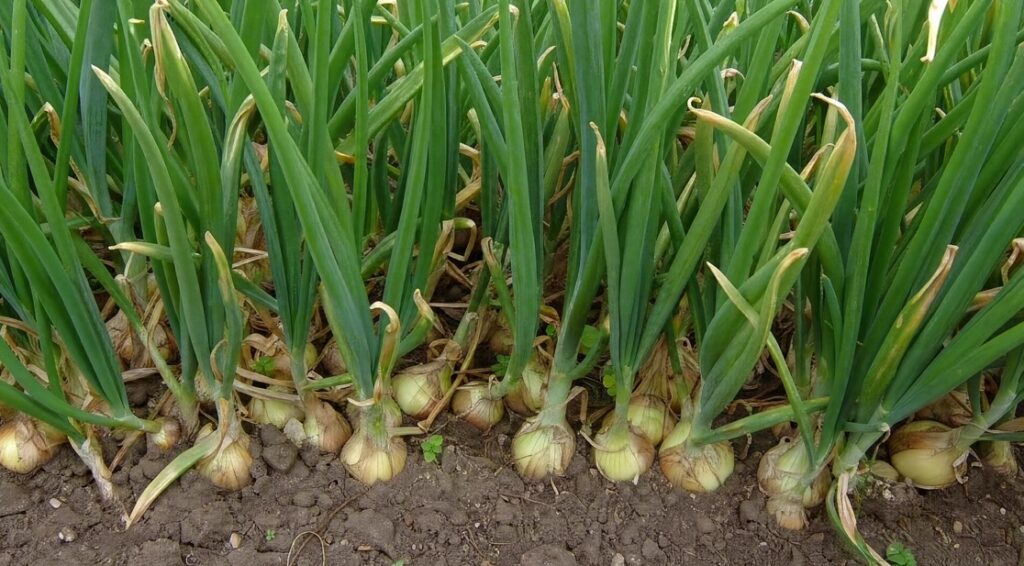
Organic Solutions: A good space for onion transplants is about 6- 8 cm apart in rows 15 cm wide when using drip irrigation, and you desire to have medium-sized onions. Large spacing will give you large bulbs. Plant the sets so the tip is just at soil level. Refer to our guide on making nursery and seed beds for best practices.
Early planting in cool weather builds strong roots before bulbing begins.
4. Watering Errors: Too Much, Too Little, or Inconsistent
Your Onions need consistent moisture, especially during bulbing. If you overwater, you’ll be more likely to experience rot and fungal issues. At the same time, if you underwater your onions, you will stress them, triggering bolting or poor bulb development.
Drip irrigation or soaker hoses are ideal for organic systems as they keep foliage dry, reducing disease.
Avoid This Mistake: Water deeply and regularly—about 1 inch per week, more in heat. Mulch application will help regulate soil moisture. Our how-to start an organic garden from scratch includes irrigation tips for beginners.
Fluctuating moisture is a key contributor to why my onions are not bulbing and bolting.
5. Nutrient Imbalances and Fertilization Timing
Onions are heavy feeders but sensitive to timing. Late nitrogen applications encourage soft growth and poor storage. Deficiencies in any major nutrient halt bulbing.
Best Practices: Side-dress with compost tea or fish emulsion early in growth. Use our best organic fertilizers for vegetables resources for schedules. Soil tests guide amendments precisely.
6. Pest and Disease Management Failures
Thrips, onion maggots, downy mildew, purple blotch, and white rot are among the very common diseases and pest problems on onions. If you neglect to manage them properly, then significant losses will be inevitable.
Solutions: Rotate your crops intentionally. Use row covers and encourage beneficial insects. Companion planting with carrots or herbs will greatly help. Neem oil and insecticidal soap application will help address thrips organically. See how to make an organic pesticide at home using garlic and other ingredients.
Sanitation—removing debris—prevents overwintering pests. For more, read our piece on why organic farming is regenerative.
Conclusion
Mastering organic onion farming means learning from common onion farming mistakes like mismatched varieties, poor soil, watering issues, and timing errors. By understanding why my onions are not bulbing and resolving organic onion growing problems through organic methods, you can achieve bountiful harvests season after season.