
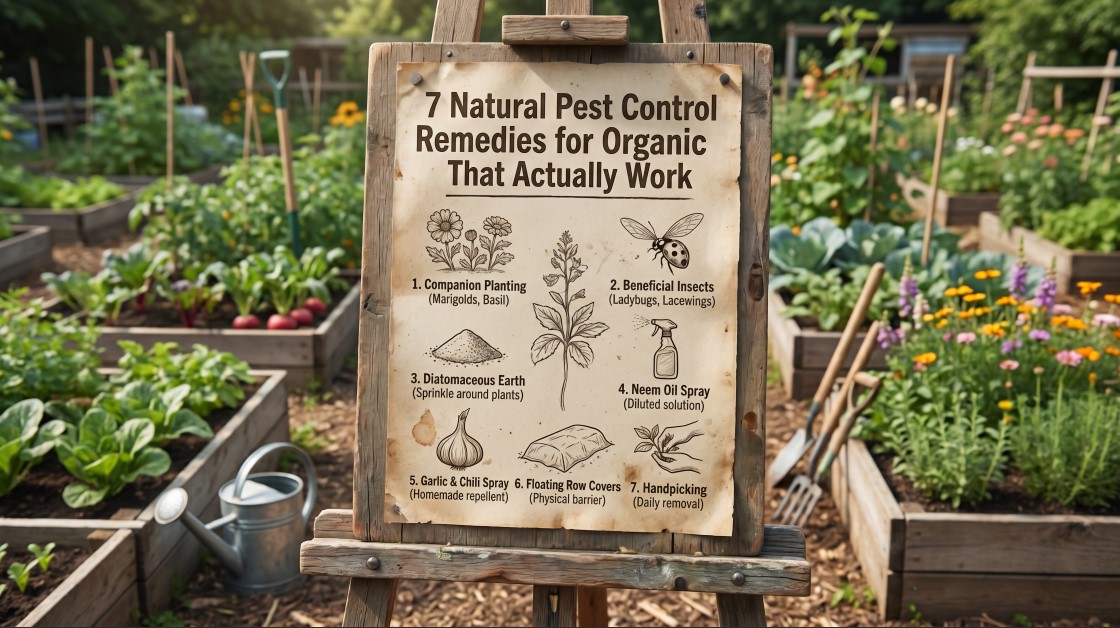
Pests are inevitable in any garden, and they can really be destructive if you fail to control them. You have the option of killing them with synthetic pesticides or choosing a Natural Pest control method for your garden. Still, synthetic chemical pesticides can harm beneficial insects, degrade soil health, damage or kill pollinators, and pose risks to your family’s health. The good news is that we have many proven natural remedies that can effectively manage common garden pests while preserving ecological balance.
For a broader look at protecting your garden without chemicals, see this guide: Organic Pest Control: How to Protect Your Garden Without Poisoning the Planet.
1. Neem Oil: The Multi-Purpose Defender
Neem oil, extracted from the seeds of the neem tree, is one of the best organic pesticides for organic pest management. It disrupts the insect’s feeding, growth, and reproduction processes. It can help control aphids, spider mites, whiteflies, and mealybugs, while also offering mild protection against powdery mildew.

How to Use It: Mix 1–2 teaspoons of cold-pressed neem oil with 1 quart of warm water and a few drops of castile soap as an emulsifier. Spray in the evening, covering the undersides of the leaves. Reapply every seven days. We may increase the application frequency based on your locality and the level of infestation.
Its active compound, azadirachtin, consisting about 70% of all present chemicals, acts as a natural insect repellent. It breaks down quickly in sunlight and soil, making it safe for organic systems. Many gardeners see significant aphid reduction within days of consistent use.
For more on starting your chemical-free journey, read: How to Start an Organic Garden from Scratch.
2. Garlic and Chili Sprays: Powerful Homemade Repellents
Garlic -Chili Sprays create an effective, low-cost spray readily available on almost every corner of the world. Garlic’s sulfur compounds, the most active chemical in garlic, and chili’s capsaicin repel and disrupt many pests. In fact, the action of allicin in garlic has been found to kill some pests.
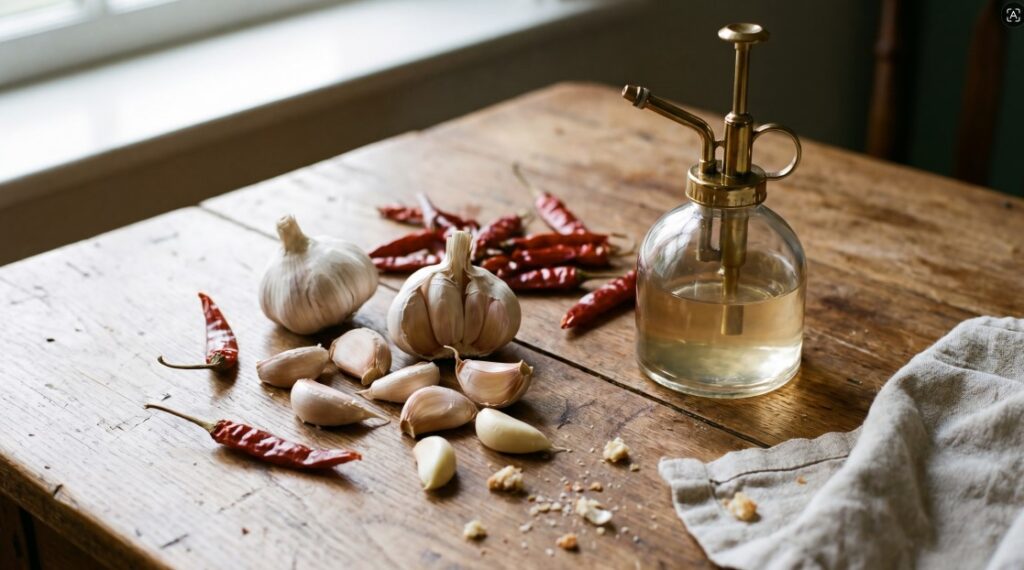
Recipe: Blend 4–6 garlic cloves (or 2 tablespoons hot pepper sauce) with 1 Litre of water, steep overnight, and strain. Add a teaspoon of liquid soap and spray every few days.
This spray does well on aphids, cabbage worms, and ants. The antifungal properties of garlic help to deter some fungal issues.
Learn more about preventing common tomato issues naturally in this article on compost tea recipes for suppressing early blight.
3. Diatomaceous Earth (DE)
Diatomaceous earth is a naturally occurring sand extracted from the earth. It consists of very tiny skeletons of algae that have fossilized over hundreds and thousands of years.
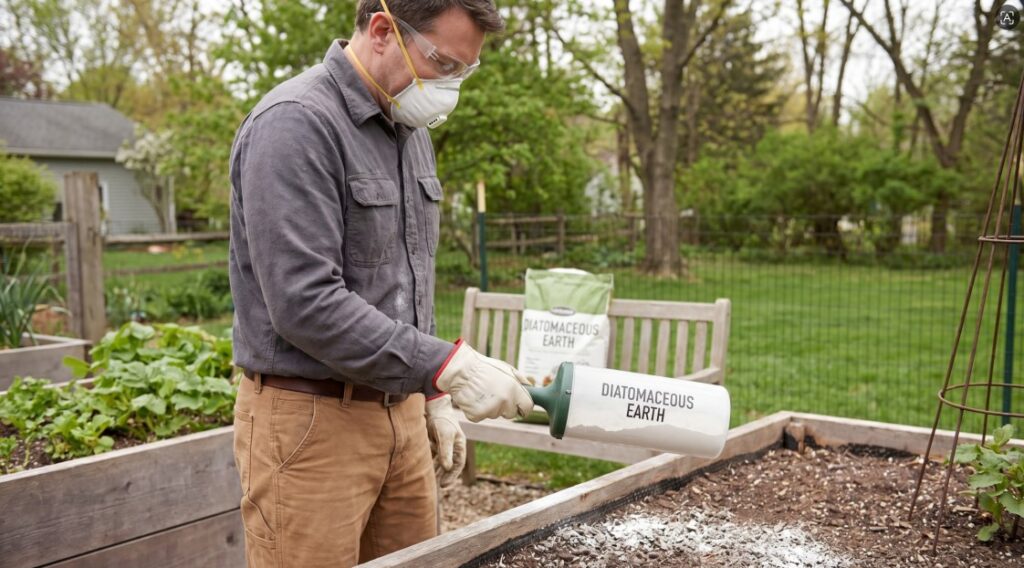
Diatomaceous earth is most commonly used as a dust or powder for industrial purposes, and it is also used as an insecticide. It effectively controls slugs, snails, ants, and some beetles.
Application: Apply lightly on dry soil and plant bases. Use it as a barrier around vulnerable plants.
4. Insecticidal Soap: Fast-Acting Knockdown
Insecticidal soap acts by suffocating soft-bodied pests by disrupting their cell membranes. It excels against pests like aphids, whiteflies, and mealybugs.
Recipe: Mix 1–2 tablespoons pure castile soap per 3 Litres of water. Spray directly on pests in the evening.
This contact treatment breaks down quickly and has minimal residual impact on beneficial insects when used properly. Multiple applications may be needed during heavy infestations.
For additional insights on disease and pest management in vegetables, explore Early Blight solutions.
5. Bacillus thuringiensis (Bt): Targeted Larval Control
Bt is a naturally occurring soil bacterium that produces proteins toxic to specific caterpillars (cabbage worms, tomato hornworms, corn earworms) but harmless to humans, bees, and most beneficial insects.
How to Use: Apply Bt spray to foliage where larvae feed, targeting young caterpillars. Reapply every 7–10 days as needed.
Bt is highly specific and an excellent choice for brassicas and tomatoes. It integrates beautifully into any organic IPM plan.
6. Companion Planting and Trap Crops: Smart Prevention
Some intentional plant combinations can help to reduce pest pressure naturally. Marigolds repel nematodes and beetles, basil deters flies and hornworms near tomatoes, and nasturtiums serve as trap crops for aphids. The plant intentionally lures the destructive pest away from vegetables in your garden.
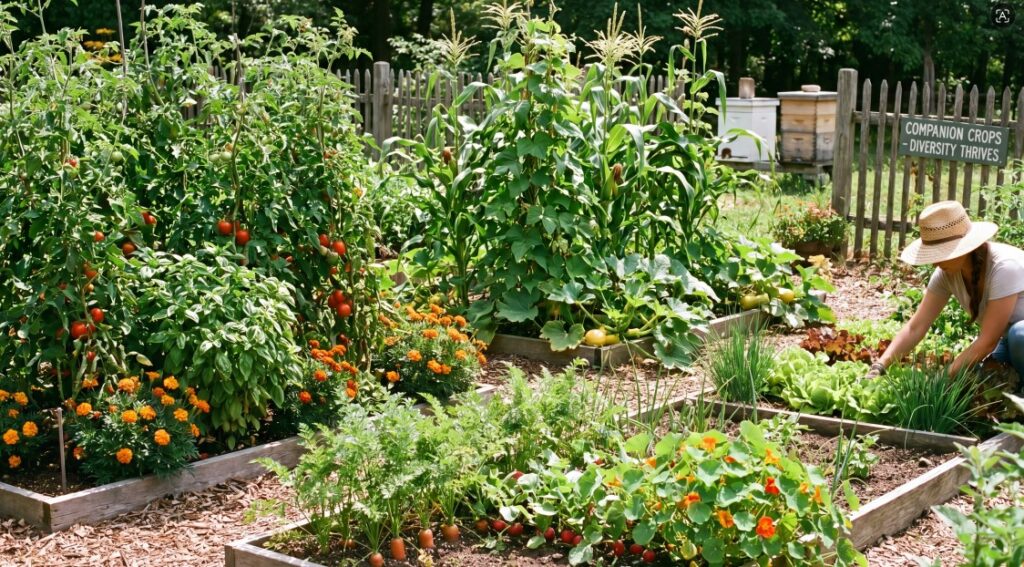
Implementation Tips: Interplant flowers, herbs, and vegetables. Use onions with roses and brassicas. Plant umbellifers to attract predatory insects.
Diverse polycultures suffer fewer outbreaks than monocultures. This approach builds long-term garden resilience. For more on growing specific crops organically, see this detailed guide to organic onion growing.
7. Beneficial Insects, Handpicking & Physical Barriers
As much as you are able, encourage ladybugs and predatory wasps in your garden to help reduce harmful insects. If your garden is small, handpicking larger pests daily into soapy water may help reduce the pest population. Use row covers, copper tape for slugs, and netting for birds and insects.
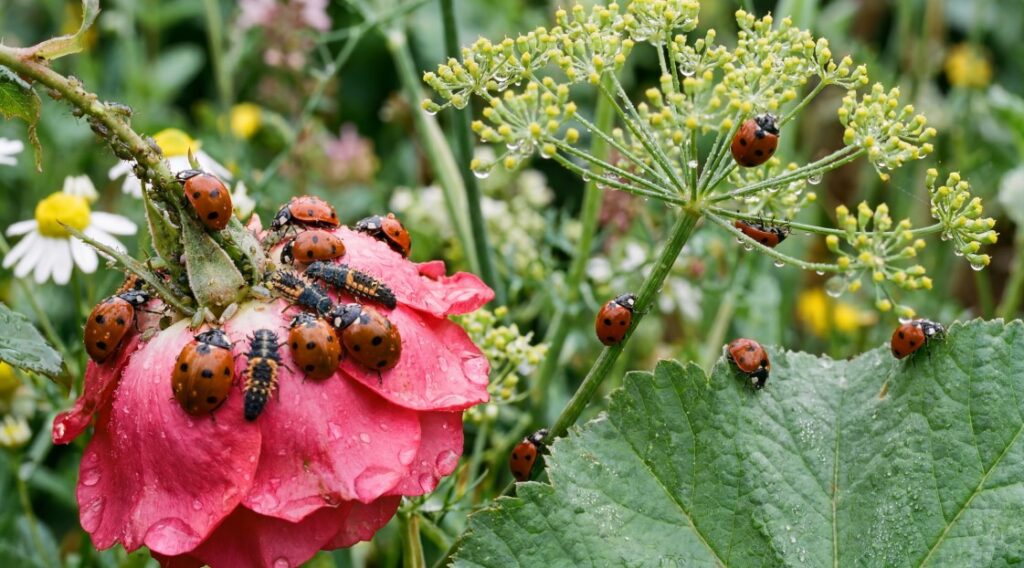
Best Practices:. Scout regularly and remove damaged material promptly.
This biological and mechanical approach creates a self-regulating ecosystem over time and reduces reliance on sprays.
Additional proven strategies are covered in: Organic Ways to Treat Pests in a Vegetable Garden and Roots and Refuge Farm organic pest control guide.
Conclusion
Natural pest control is clearly a practical, affordable, and deeply rewarding method of controlling Pests in your organic garden. By using neem oil, kitchen sprays, diatomaceous earth, insecticidal soap, companion planting, and beneficial insects, you can maintain not only a vibrant but also a resilient organic garden. Success comes from observation, patience, and integration rather than perfection.
2 thoughts on “7 Natural Pest Control Remedies for Organic Gardens That Actually Work”