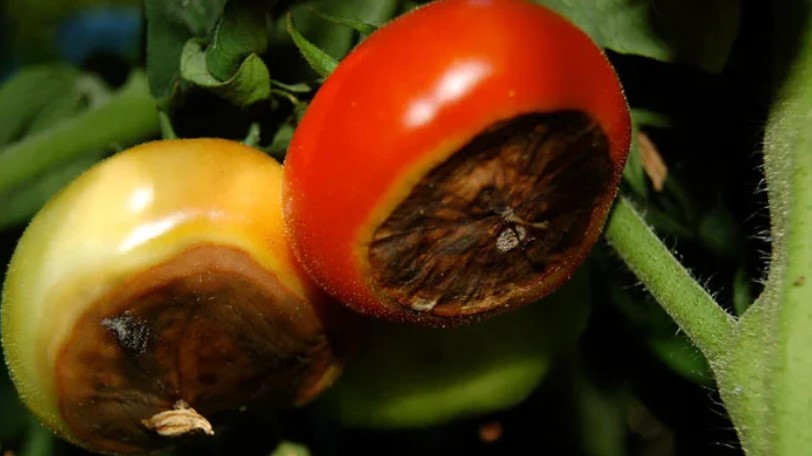
Blossom End Rot is a physiological disorder that affects some vegetables, such as tomatoes and peppers, causing the bottom of the fruit to develop a dark, sunken, leathery patch. It is one of the most heartbreaking and discouraging sights for any organic gardener
While Blossom end rot in your tomatoes can be discouraging, the good news is that it is not a disease. It is not caused by a fungus, bacterium, or virus. As already mentioned, it is a physiological disorder, which means that you can completely control or prevent it without the use of poisonous chemicals.
What Causes Blossom End Rot?
As the University of Wisconsin puts it, blossom-end rot is caused by a calcium deficiency inside the plant. and not in the soil. This happens when the plant is unable to take up calcium from the soil for the developing fruit.
This happens because of:
1. Inconsistent or Irregular Watering
The plant depends on water as a solvent to take up nutrients from the soil. When the soil goes from too dry to too wet and back again, the plant cannot absorb, transport, or even utilize the calcium at a steady rate. The developing fruit is starved of calcium at the time it needs it most.
2. Root Damage
Roots are the medium through which water enters the plant. When they are disturbed or damaged, they cannot absorb water and nutrients properly. This damage can be caused by aggressive hoeing, deep cultivation near plants, or transplant shock. Damaged roots means inadequate calcium uptake.
3. Overfertilizing with Nitrogen
Nitrogen is good for leafy growth. When nitrogen is available in abundance than calcium, it drives rapid leafy growth, which competes with the fruit for calcium. The leaves will always win, and the fruit will always suffer.
4. High Salt Levels in Soil
Excess fertilizer salts interfere with calcium uptake at the root level, even when calcium is physically present in the soil. High Sodium levels compete with Calcium, Potassium and Magnesium for uptake by plant roots
5. Soil pH Imbalance
Calcium is most available in soils with a neutral to slightly acidic pH (6.0 to 7.5). Both highly acidic and alkaline soils can limit calcium uptake by plants, even in calcium-rich soils.
6. Excessive Ammonium or Potassium
Both nutrients compete with calcium for uptake at the root. When they dominate, calcium gets blocked.
If you are also struggling with other soil-related issues in your garden, read our article on 6 Signs Your Garden Soil Needs Organic Matter here.
Which Plants Are Most Affected?
Blossom end rot most commonly affects:
- Tomatoes
- Peppers
- Eggplants
- Squash and zucchini
- Watermelons and cucumbers
Among tomatoes, roma, san marzano, and large beefsteak varieties tend to be more susceptible than cherry tomatoes. If you are just starting out with tomatoes, choosing the right variety from the beginning can make a real difference — see our guide on the best organic tomato seeds for beginners to pick varieties that perform well under organic conditions.
How to Stop Blossom End Rot Naturally
1. Water Consistently and Deeply
Inconsistent or irregular watering is the number one trigger of blossom-end rot, and fixing it will solve the problem in most gardens.
Make sure to water deeply and regularly so that the soil stays evenly moist. The temperatures and the type of your soil will dictate how many times you will water per week. The goal is to keep the top 6 inches of soil consistently moist.
2. Mulch Heavily to Retain Soil Moisture
Mulching is a powerful tool in organic gardening that can help prevent blossom end rot. A 3 to 4-inch layer of organic mulch around your plants helps to:
- Reduces soil moisture evaporation
- Moderates soil temperature, thus preventing the stress spikes that interrupt calcium uptake
- Gradually improves soil structure as it breaks down
3. Apply Agricultural Lime or Gypsum
If a soil test shows low calcium or a pH below 6.2, then applying agricultural lime (aka calcium carbonate) is your best organic fix. It raises soil pH while also adding calcium.
But if your pH is ok but you still need calcium, use gypite (calcium sulfate/gypsum) instead — it adds calcium without affecting pH. It is one of the best organic soil amendments available.
4. Make a Calcium Foliar Spray
For a faster approach, make a calcium foliar fertilizer spray and apply it directly to the foliage and fruits. This method gets calcium to where it is needed quickly.

Simple Eggshell Calcium Spray Recipe:
- Collect 10 to 12 clean, dry eggshells
- Crush them finely and boil in 1 litre of water for 10 minutes
- Let steep overnight
- Strain and dilute with 4 litres of water
- Spray directly onto leaves and small developing fruits in the early morning or evening
Repeat every 5 to 7 days during the fruiting period.
5. Add Organic Compost to Improve Calcium Availability
Well-made and well-rotted compost is one of the best natural sources of calcium and trace minerals. It helps improve the soil’s structure and water-holding capacity, which are critical for calcium uptake.
To take your compost game further and give your fruiting plants a powerful nutrient boost, consider making comfrey fertilizer. Our detailed guide on how to make organic fertilizer with comfrey walks you through the process step by step — comfrey is exceptionally rich in potassium and calcium, making it ideal for tomatoes and peppers.
6. Use the Right Organic Fertilizer
Avoid heavy fertilizing with nitrogen-heavy products. High nitrogen pushes excessive leafy growth, which pulls calcium away from developing fruit.
Instead, choose balanced organic fertilizers at the fruiting stage, ones that are lower in nitrogen and richer in phosphorus, potassium, and calcium. Bone meal is an excellent calcium-rich organic fertilizer. Seaweed extracts and fish emulsion, used in moderation, are also excellent choices.
For a full breakdown of what to use and when, read our guide on the best organic fertilizers for vegetables.
7. Do Not Disturb the Roots
Frequent hoeing near the base of your plants can slice through feeder roots, disrupting water and calcium uptake. Avoid cultivating soil within a 12-inch radius of the plant stem. Use mulch liberally to suppress weeds.
Preventing Blossom End Rot Before It Starts
The following are practical suggestions for preventing blossom-end rot in some vegetables.
Before planting:
- First, test your soil pH and amend if necessary
- Incorporate 5 to 8 centimetres of mature compost into beds
- Add bone meal or lime if calcium is low
- Choose a planting site with good drainage
At planting:
- Handle seedling roots gently to avoid transplant shock
- Water well immediately after planting
- Apply mulch right away
During the season:
- Water deeply and consistently
- Avoid excessive nitrogen fertilizers once fruiting begins
- Side-dress with compost mid-season
- Monitor for signs early — early action prevents major losses
Starting your garden on the right foot from scratch makes prevention much easier. If you are new to organic gardening, our guide on how to start an organic garden from scratch covers site selection, soil preparation, and watering setup in detail.
Choosing the right garden site matters too — drainage, sunlight, and soil type all affect how well your plants manage water and nutrients. Our article on factors to consider when choosing a suitable garden site will help you make the best decision from the start.
Blossom End Rot vs. Other Tomato Problems
Blossom end rot is sometimes confused with other conditions. Here is how to tell the difference:
Blossom end rot: Dark, dry, leathery patch specifically at the bottom (blossom end) of the fruit. Does not spread to other fruits through contact. Only on the fruit, not leaves.
Early blight: Dark spots with concentric rings (like a bullseye) that appear on the lower leaves first and spread upward. Not on the fruit bottom. For a full identification guide, read our detailed article on early blight in tomatoes.
Late blight: Dark, water-soaked patches that appear rapidly on leaves, stems, and sometimes fruit in cool, wet conditions. For detailed identification and treatment, see our complete guide on tomato late blight.
Anthracnose: Sunken, circular, water-soaked spots on ripe or nearly ripe fruit — usually appearing later in the season. See our article on anthracnose and organic treatments.
If you want a full overview of all the diseases your tomatoes can face, our complete guide to all tomato diseases is an invaluable reference to keep bookmarked.
Common Mistakes That Make Blossom End Rot Worse
The following are common mistakes to avoid to prevent Blossom-end rot.
Overwatering after drought: It does not fix the problem. It will only shock the plant and make calcium uptake more difficult.
Adding too much lime at once: Spiking the soil pH too high will lock out other nutrients. Always remember to test before amending and follow recommended rates.
Spraying calcium on already-rotted fruit: Calcium spray does not heal the fruit that is already affected. It only prevents the developing fruits from blossom-end rot.
Avoiding common organic gardening mistakes is critical for overall garden success — if you are newer to organic growing, our article on 9 beginner organic gardening mistakes to avoid covers many of the traps that lead to frustrating problems like this one.
Frequently Asked Questions
Can I eat tomatoes with blossom end rot? Yes. Blossom end rot is not a pathogen. Cut away the affected portion, and the rest of the fruit is perfectly safe and edible.
Does blossom end rot spread from plant to plant? No. Because it is not a disease, it cannot spread.
How long does it take to fix blossom end rot? Once you address the watering and soil issues, new fruits forming after your intervention should develop without blossom end rot. You will typically see improvement within 2 to 3 weeks on new fruit.
Is calcium spray enough on its own? Foliar calcium spray helps quickly but is not a substitute for solving the underlying problem. Always address watering consistency and soil health at the same time.
Can blossom end rot happen in containers? Absolutely — and it is even more common in containers because pots dry out much faster than garden beds. Container growers should water more frequently, use moisture-retaining potting mix, and consider self-watering containers for fruiting vegetables.
Conclusion
Blossom end rot is frustrating, but it is one of the most manageable problems in the organic garden once you understand what is driving it. The answer is almost never to add more products — it is to focus on the fundamentals: consistent watering, healthy soil, the right organic fertilizer, and a little patience.
For a complete approach to growing the healthiest possible tomato plants, do not miss our ultimate guide to organic tomato gardening — it covers everything from soil prep and seed selection to pruning and disease prevention in one place.