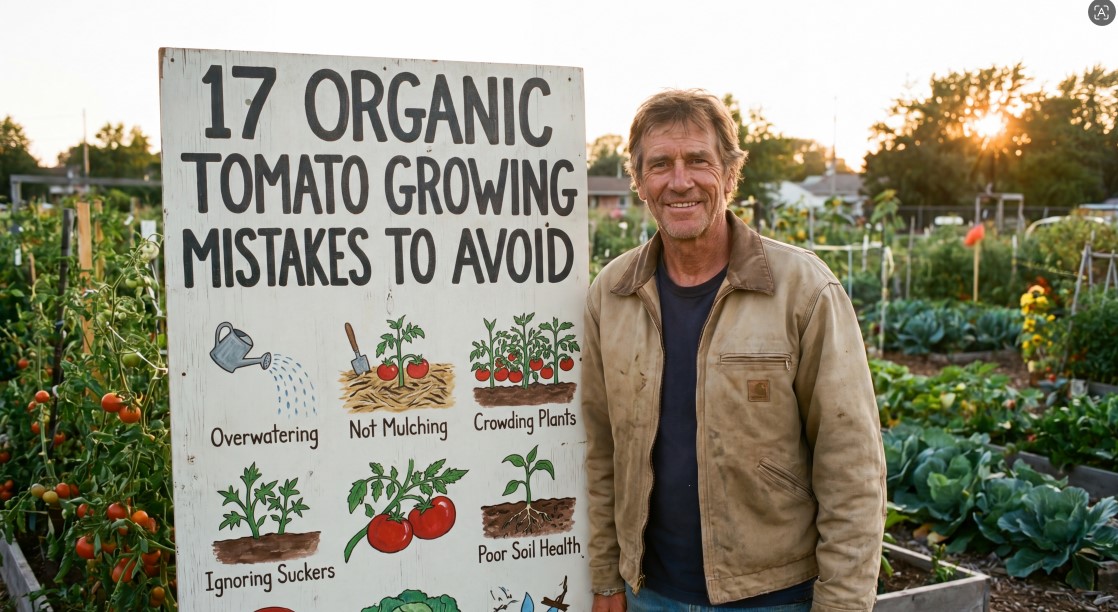
To grow tomatoes without chemicals is one of the most satisfying experiences for any new gardener. Fresh and juicy tomatoes straight from the garden often taste better than what you find in the local stores. However, as a beginner, you’re prone to making many mistakes unknowingly. These errors have the potential of reducing your garden yields and inviting pests and many types of tomato diseases into your beautiful garden. Understanding the 17 common Organic tomato growing mistakes can help you avoid frustration and loss and produce healthier, more abundant harvest.
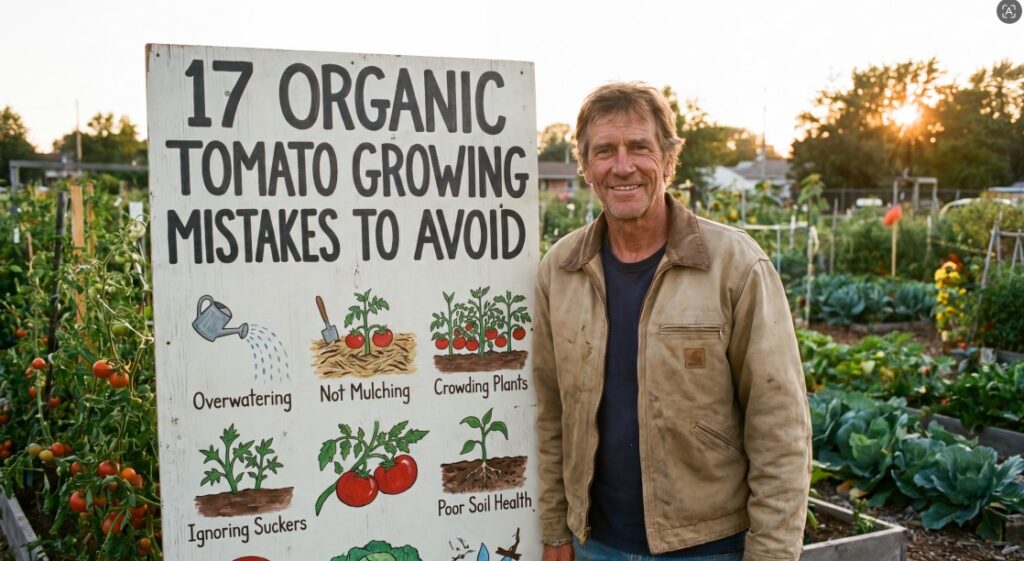
Tomatoes require the right balance of sunlight, water, and nutrients to thrive. Small mistakes, such as improper watering or inappropriate spacing, can become major setbacks during the growing season of your tomatoes. But the good news is that with a few organic gardening principles, you can avoid the following tomato growing mistakes.
1. Planting Tomatoes Too Early
Tomatoes do not like cool temperatures or a lot of cold soil. Some beginners make the mistake of planting tomatoes before it is warm enough for tomatoes to thrive.
If you plant your tomatoes too early, then any of the following challenges may follow your tomato trees.
- Stunted growth
- Delay fruit production
- Increase disease susceptibility
- Damage to young seedlings
Always keep in mind and wait until:
- The Frost danger is gone
- The soil is warm
2. Choosing the Wrong Tomato Variety
Many gardeners, especially beginners, select tomato varieties based only on flavour and appearance instead of climate suitability, disease resistance and other factors. Some varieties thrive in dry climates, while others thrive in humid and wet climates.
When choosing tomatoes, consider the following:
- Disease resistance
- Local climate
- Growing season length
- Determinate vs. indeterminate types
If you make the right choice of the variety at the beginning, it will reduce tomato growing mistakes and ensure healthy and better fruits.
3. Ignoring Soil Health
Healthy soil is the foundation of successful organic gardening. Tomatoes are heavy feeders, so they need fertile, nutrient-rich soil with high organic matter. The primary macronutrients needed by tomatoes include nitrogen (N) for vegetative growth, phosphorus (P) for root development, and potassium (K) for improving fruit flavor and overall plant hardiness.
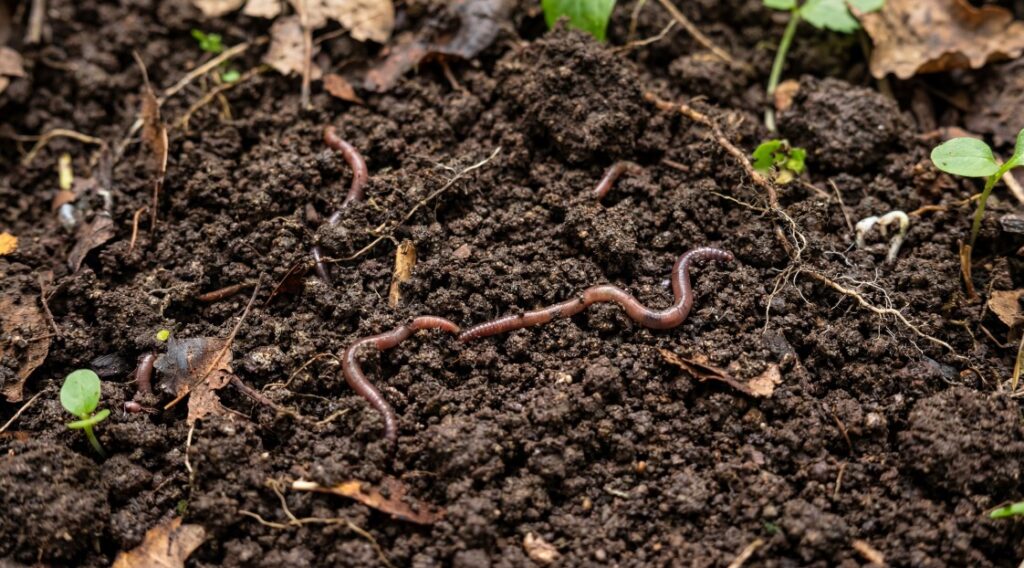
Poor soil often leads to:
- Weak growth
- Yellow leaves
- Small fruits
- Blossom end rot
Make sure to improve your soil naturally using:
- Compost
- Worm castings
- Aged manure
- Leaf mold and
- Organic mulch
Healthy soil microbes help tomato plants absorb nutrients more efficiently.
4. Overwatering Tomato Plants
Overwatering is one of the most common tomato gardening mistakes for beginners. Many gardeners often assume that tomatoes need a lot of watering, but soggy soil suffocates roots and promotes tomato fungal diseases like early blight and late blight.
Too much water may cause one or more of the following.
- Root rot
- Yellowing leaves
- Fruit cracking
- Fungal infections
Instead of daily watering, water deeply and less frequently. You may need to use Organic Mulch to preserve moisture for a long time.
5. Underwatering Tomatoes
While Overwatering is a tomato gardening mistake to avoid, Underwatering is another one. Inconsistent watering stresses tomato plants, leading to reduced fruit quality. Tomatoes that repeatedly dry out will likely have cracked fruit.
Signs of underwatering tomatoes include:
- Wilting
- Blossom drop
- Stunted growth
- Weak stems
- Small fruits
- Cracked fruits
- Yellow leaves
6. Failing to Mulch
Bare soil dries out quickly and encourages weeds. Mulching is essential in organic tomato gardening because it protects soil health naturally.
Benefits of mulching your tomatoes include:
- Moisture retention
- Weed suppression
- Soil temperature regulation
- Disease prevention
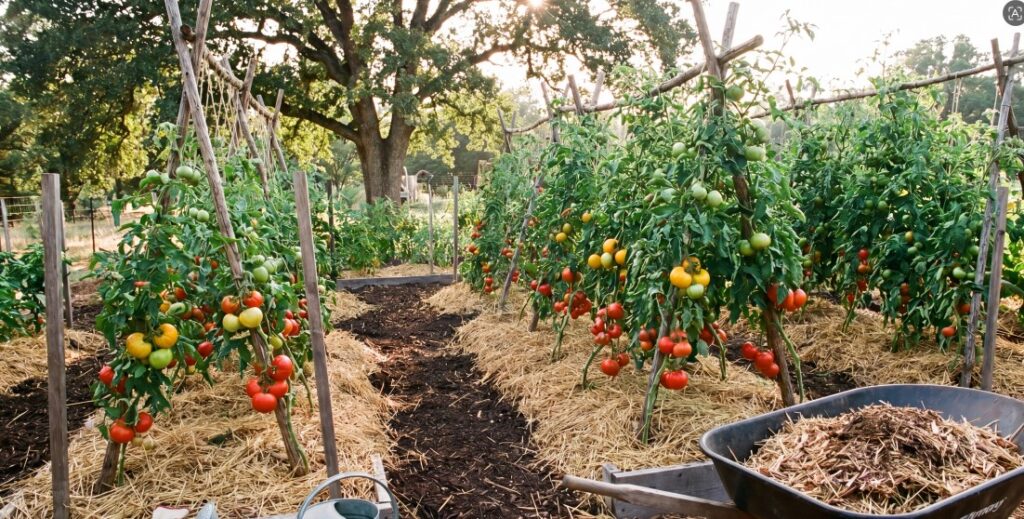
Good organic mulch materials include:
- Straw
- Grass clippings
- Shredded leaves
- Compost
Mulch also prevents soil-borne fungal spores from splashing onto leaves, thereby reducing the spread of fungal infections
7. Crowding Tomato Plants
Overcrowding your tomatoes creates humid conditions that encourage disease outbreaks. Crowded tomatoes often suffer from:
- Increased fungal diseases
- Smaller harvests and
- Reduced sunlight penetration
Maintaining Proper spacing helps prevent many Organic tomato growing mistakes by improving airflow and reducing disease pressure naturally.
8. Watering the Leaves Instead of the Soil
Wet tomato leaves create ideal conditions for fungal diseases such as early blight and powdery mildew.
Always water at the base of the plant rather than overhead. Drip irrigation and soaker hoses work especially well in organic gardens because they conserve water while keeping foliage dry.
Morning watering is best because it allows accidental leaf moisture to dry quickly.
9. Neglecting Tomato Pruning
proper pruning helps improve airflow, removes the infected foliage earlier and directs energy toward fruit production.
When Pruning your tomatoes make sure to focus on removing:
- Suckers
- Diseased branches
- Yellow leaves
- Lower leaves touching the soil
Pruning is especially beneficial for indeterminate tomato varieties.
“One of the most impactful things you can do to fix this is learn how to prune your tomatoes correctly for maximum yield.”
However, avoid over-pruning because leaves protect fruits from sunscald.
10. Not Supporting Tomato Plants
Your tomato plants often collapse under the weight of developing fruits. Fruits touching the ground become vulnerable to pests and disease.
Common support methods include:
- Tomato cages
- Stakes
- Trellises
- Florida weave systems
Installing supports early prevents root damage later in the season.
11. Using Too Much Nitrogen
One of the hidden Organic tomato growing mistakes is overfeeding plants with nitrogen-rich fertilizers like the chicken manure. Excess nitrogen produces huge leafy plants with very little fruit.
Symptoms include:
- Excessive leaf growth
- Delayed flowering
- Reduced fruit production
Balanced organic fertilizers with phosphorus and potassium help support flowering and fruit development.
Note that Phosphates are good for phosphorus, and wood ash is a good source of potassium.
12. Ignoring Crop Rotation
Planting tomatoes in the same spot every year encourages soil-borne diseases and pest buildup.
Tomato diseases that survive in soil include:
- Fusarium wilt
- Verticillium wilt
- Nematodes
- Early blight
Rotate tomatoes every few years to maintain healthier soil and reduce disease problems naturally.
Avoid planting tomatoes after:
- Potatoes
- Peppers
- Eggplants
These crops belong to the same plant family and share many diseases.
13. Forgetting Companion Planting
Companion planting is the strategic practice of growing different crops in proximity to help one another. It improves biodiversity and can naturally reduce pests and diseases.
Helpful tomato companions include:
- Basil
- Marigolds
- Garlic is a good repellant
- Nasturtiums attract pests to themselves
- Onions is a good repellant
These plants help:
- Attract beneficial insects
- Repel pests
- Improve pollination
- Support garden biodiversity
Organic gardens are happy when multiple plant species grow together.
14. Allowing Weeds to Spread
Weeds compete aggressively with tomatoes for nutrients, moisture, and sunlight. They may also harbor harmful pests and diseases.
Organic weed control methods include:
- Mulching
- Hand pulling
- Shallow cultivation
- Companion planting
Keeping weeds under control improves tomato growth and garden cleanliness.
15. Ignoring Early Disease Symptoms
Many beginners overlook early warning signs until diseases spread throughout the garden.
Watch carefully for:
- Yellow spots
- Brown lesions
- Curling leaves
- Wilting and
- Mold growth
Early intervention is very critical in your organic gardening journey. Pruning infected leaves can stop diseases from spreading.
16. Harvesting Tomatoes Too Late
Pests love juicy and ripe tomato fruits. Leaving ripe tomatoes on the vine too long may attract pests and increase fruit cracking.
Frequent harvesting:
- Encourages more fruit production
- Reduces pest damage
- Prevents splitting
- Improves fruit quality
Many tomatoes continue ripening indoors after they begin changing color.
17. Giving Up Too Quickly
Organic Gardening involves ups and downs, especially when you have not mastered the science. Even experienced gardeners sometimes face pests and diseases and fail to control them.
To learn from mistakes is part of the life of a good gardener. Most organic tomato-growing mistakes can be corrected with better practices mentioned in the previous points, such as healthier soil and consistent care.
Organic gardening rewards patience, experimentation, and long-term soil improvement.
Final Thoughts
Tomatoes are among the most rewarding crops to grow, but beginners often struggle because of avoidable mistakes. Problems such as overwatering, overcrowding, poor soil preparation, and improper pruning can significantly reduce harvests.
Fortunately, most Organic tomato growing mistakes are easy to prevent once you understand the needs of tomato plants. With patience and consistent care, your organic tomato garden can produce healthier plants, larger harvests, and delicious homegrown tomatoes year after year.
1 thought on “17 Organic Tomato Growing Mistakes That Ruin Your Harvest”