
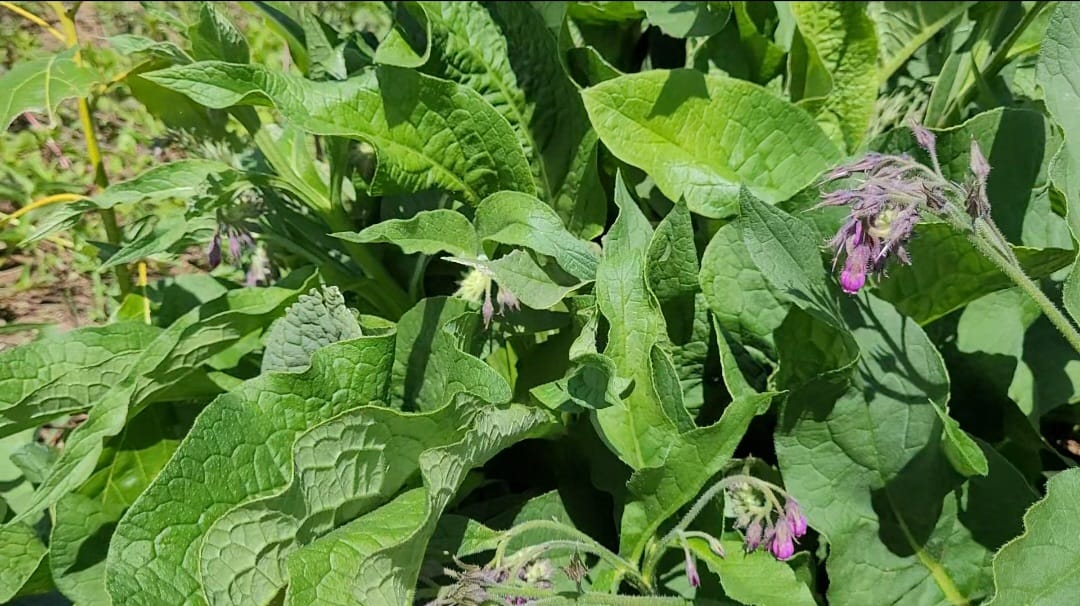
Organic comfrey is one of the most common herbs that has been appreciated by gardeners and natural remedy enthusiasts for centuries. Comfrey is scientifically known as Symphytum officinale, and it thrives in most climates around the globe.
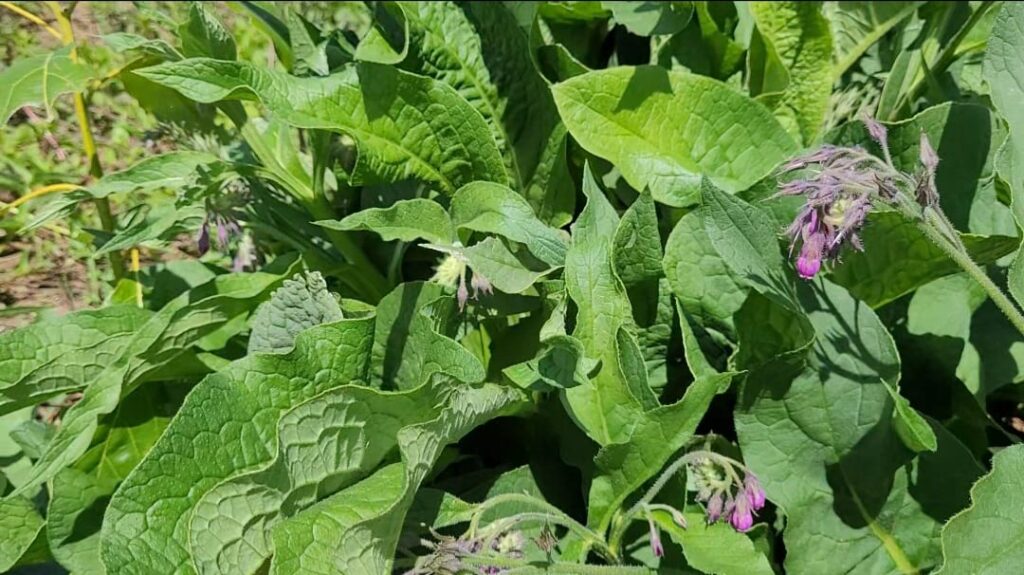
While some communities grow comfrey for food, thousands have found it to be a very powerful natural remedy for their maladies. This powerhouse remedy has been used for centuries for wound healing, soothing inflamed joints, and relieving inflammation
Quick Fact
Comfrey is also known as “knit bone”, because of its ability to knit on the bone. Comfrey leaf poultice can be applied to breaks, sprains, and bruises for quick healing.
Why is Organic Comfrey good for Healing?
Comfrey is rich in phytochemical. The roots and the leaves of comfrey are rich in allantoin, rosmarinic acid, tannins, mucilage, and triterpenes. Allantoin, stimulates cell proliferation which is why it encourages rapid growth of new skin and connecting tissues. And by the way, allantoin is a good mosturizer and that is why its used in cosmetics.
Rosmarinic acid on the other hand exhibits anti-inflammatory and antioxidant effects, which helps to reduce swelling of cells thereby protecting them from oxidative stress.
Tannins is a good astringent. It helps to tighten tissues, thereby reducing oozing in wounds. This is the very reason why comfrey is used in wound healing.
Mucilage, a thick, gel-like polysaccharide compound, which is slimy by nature, helps to soothe irritated skin and mucous membranes. Mucilage acts as a hydrating, soothing, as mentioned before, and anti-inflammatory agent for the skin. When applied, it forms a protective, cooling barrier that aids tissue repair, reduces irritation, and moisturizes dry or damaged skin.
Uses of Comfrey in Healing
1. Wound Healing
As already mentioned earlier, Comfrey is praised for its ability to help in wound healing. Comfrey poultice, made from mashed leaves have been used for centuries on cuts, scrapes, burns, and ulcers. The wound-healing property is due to the presence of Tannins, which are astringent, and Rosmarinic acid, which helps with inflammation.
In addition, allantoin in comfrey stimulates cell production, which is good for wound-healing. In a research article where physicians used comfrey for wound healing, they rated it very good, with an over 93% positive rate.
2. Anti-Inflammatory and Pain-Relieving Effects
Organic comfrey shines as one of the best natural anti-inflammatory plants. Randomized controlled trials have shown that comfrey ointments helped to relieve pain and swelling in patients with osteoarthritis and back pain.
As stated earlier, Rosmarinic acid inhibits inflammatory pathways, while allantoin supports tissue regeneration. The combination of these two compounds helps to speed the recovery times.
Related: How to Use Comfrey to Make Organic Fertilizer: A Natural Solution for Your Garden
3. Bone and Joint Support
Organic comfrey has long been associated with bone healing properties. Historically, the same herb has been known as boneset or knitbone. The words suggest that this herb has the ability to set or knit bones together. The presence of allantoin content helps to stimulate cartilage and bone regeneration. This is why it is especially used in the treatment of bone fractures.
Comfrey poultices can help speed healing of the damaged tendons by encouraging collagen synthesis.
4. Skin and Hair Benefits
The moisturizing effects of comfrey, by the compound mucilage, and its cell-regenerating allantoin make it excellent for dry, irritated skin. Creams made from comfrey can reduce wrinkles by promoting collagen production and promoting skin renewal. Comfrey extracts in hair care cosmetics help to strengthen hair follicles and soothe the scalp.
Conclusion
Organic comfrey’s healing properties, including wound healing and pain relief, make it a remarkable herb with a legacy that bridges ancient wisdom and modern science. Whether you have dry skin, joint pains, or an open wound, this amazing herb will turn out to be your best friend and choice.
2 thoughts on “The Healing Wonders of Organic Comfrey”