
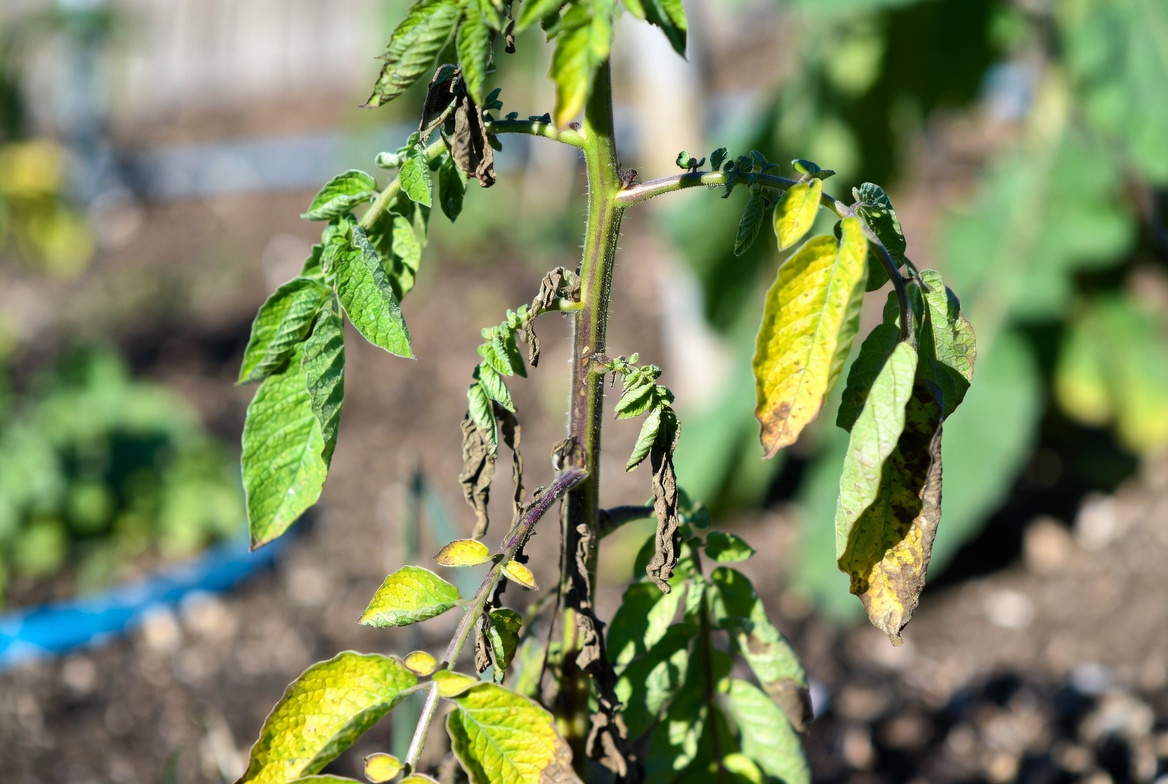
Fusarium wilt is a soil-borne disease that damages the vascular systems of plants by obstructing water flow within their tissues..
This disease thrives during hot or dry weather when the moisture is especially very low. Fusarium wilt attacks potatoes, tomatoes, eggplant, and pepper plants. This fungus interferes with the plant’s water-conducting vessels after entering through the roots. The foliage wilts and turns yellow as a result of water flow restriction. The disease first affects the lower leaves before spreading to the younger leaves before killing the plant.
Quick Fact
Every growing season has only one cycle of infection; once a plant is infected, it typically does not spread to other plants during that same growing season.
Symptoms of Fusarium Wilt in Tomatoes
The symptoms of fusarium wilt are dynamic depending on the stage of the disease. The following is a list of the very common symptoms.
- Wilting of the plants which seems to recover at night during the early stages of the disease
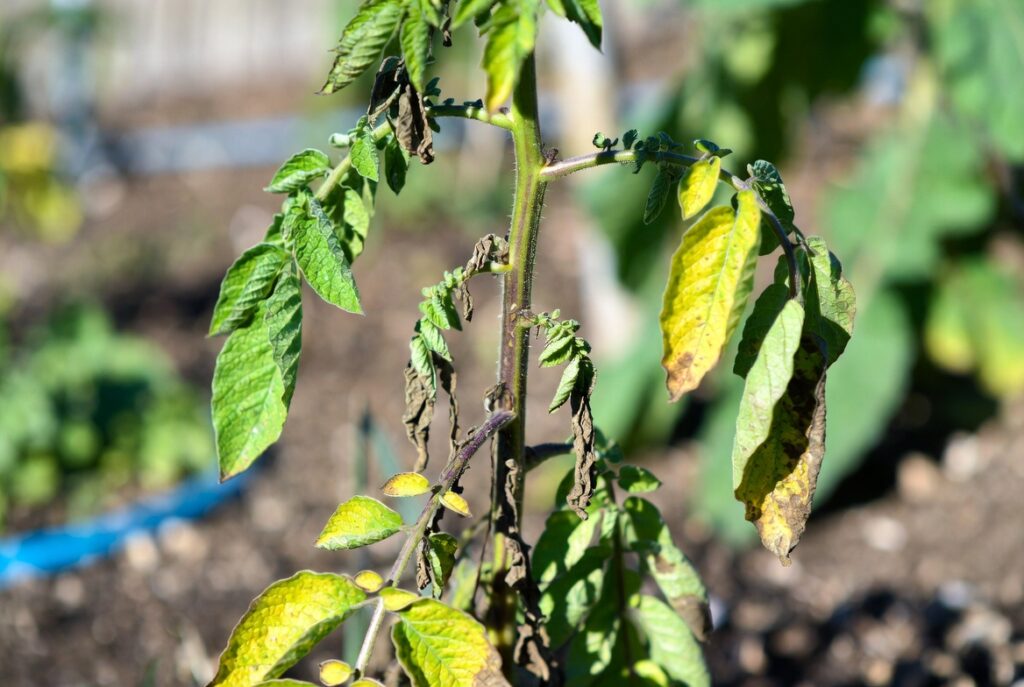
- Uneven yellowing of leaves
- Drooping and yellowing of leaves
- Stunted growth of the plant. The earlier a plant is infected, the more severe the stunting is.
- Dying of the plants
- Poor Performance or low yield
Related Article: Bacterial Speck in Tomatoes: Understanding, Prevention, and Management
What are the Organic Treatment of Fusarium Wilt?
1. Select resistant varieties.
Selecting tomato varieties with built-in resistance to Fusarium wilt is one of the most effective, economical, and eco-friendly ways to control this disease. Resistant plants carry dominant genes that prevent the fungus from colonizing the vascular system, so even when infective spores are present in the soil, the plant remains largely unaffected: it continues to transport water and nutrients normally. Visit here for resistant varieties of vegetables
2. Remove Infected Plant Debris
Removing infected plant debris is a critical step in controlling Fusarium wilt in crops. This is because the disease produces thick-walled chlamydospores that can survive in soil and on crop residue for many years. Any infected plant stems, roots or fallen leaves left in the garden or field after harvest serve as reservoirs of inoculum; when these fragments decompose, they release millions of long-lived spores that reinfect the next crop planted in that location. By promptly and thoroughly removing all debris at the end of the season, pulling up and destroying infected plants as soon as symptoms appear, growers can significantly reduce the spore load in the upper soil layers. This sanitation practice lowers disease pressure over time, delays the buildup of new races, and makes other controls far more effective.
Other Ways of controlling Fusarium Wilt
- Keep cucumber beetle populations down to a minimum, as they are known to spread the disease.
- Make sure your soil is balanced, as high nitrogen may encourage the disease.
- Maintain as weed-free an environment as possible, since weeds can host the disease.
- If the disease persists, remove the entire plant and solarize the soil with clear plastic cover over the ground for four to six weeks before replanting.
Conclusion
Fusarium wilt remains one of the most enduring and instructive foes in the history of agriculture: a stealthy, soil-borne villain that slips into a tomato’s veins, cuts off its lifeline, and lingers in the earth for decades, waiting for the next unsuspecting crop. What began as a mysterious collapse of American tomato fields in the late 19th century evolved into a global wake-up call that reshaped breeding programs, sanitation practices, and our very philosophy of disease control. Today, thanks to resistant varieties, grafting, long rotations, and relentless cleanliness, most growers can keep the fungus in check, yet its chlamydospores still sleep beneath countless gardens, ready to punish complacency. Fusarium wilt teaches a timeless truth: in farming, victory is never permanent, only borrowed; vigilance and respect for the unseen are the real price of every ripe tomato we enjoy.