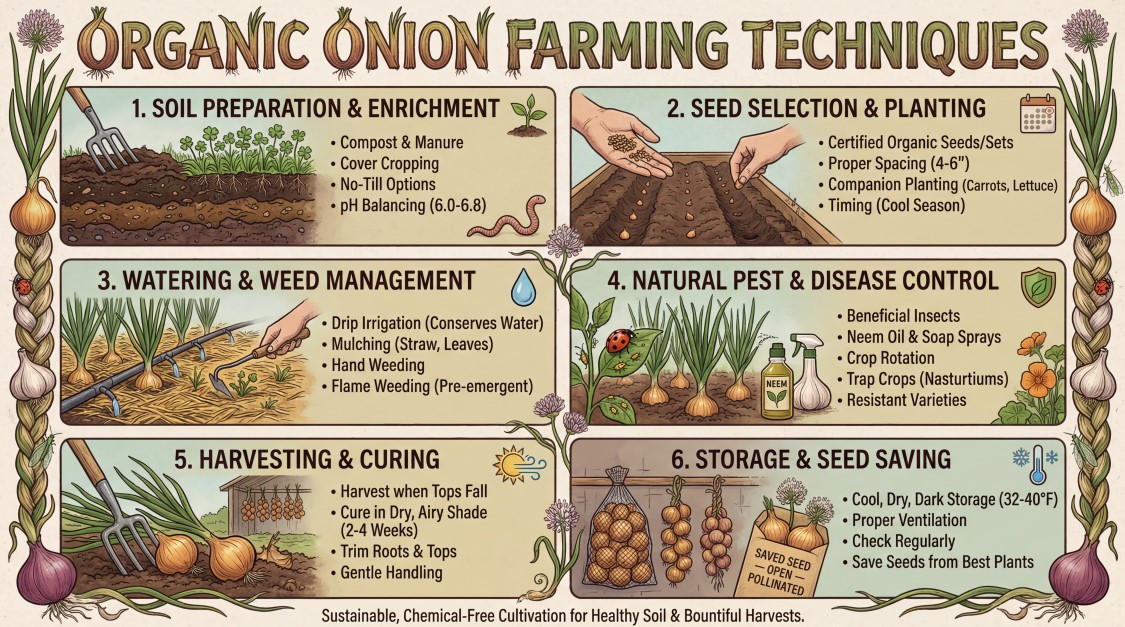
Organic onion farming has gained much popularity among home organic gardeners, small-scale farmers, and commercial growers seeking healthy, chemical-free produce that commands better prices in local and export markets. As consumer demand for healthy, sustainably grown vegetables rises, mastering effective methods becomes essential for success. This comprehensive step-by-step guide explores every aspect of growing organic onions without synthetic inputs, focusing on proven organic practices that build soil health, boost yields, and minimize environmental impact.
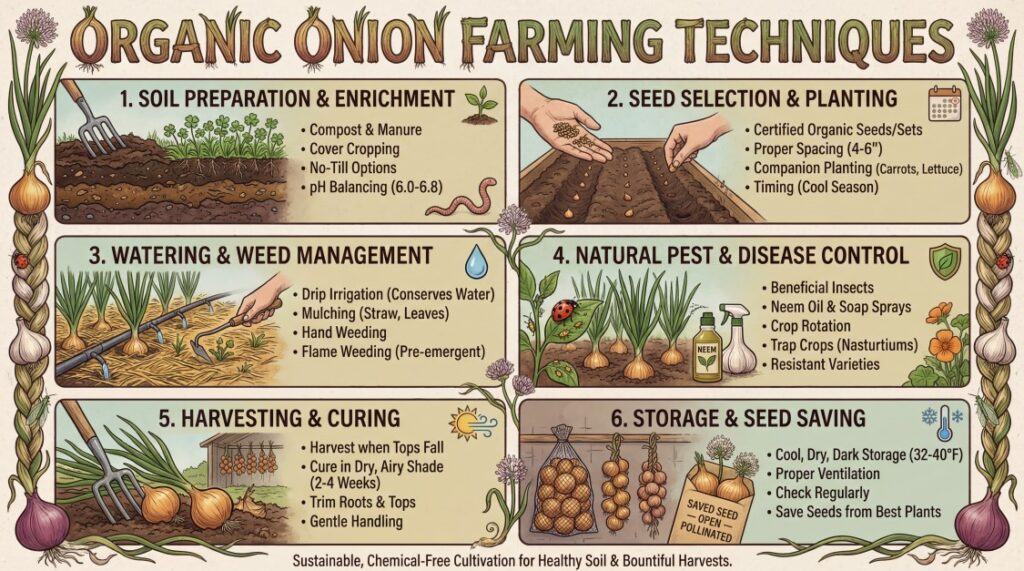
One of the foundational elements of successful organic onion farming is understanding the crop’s unique requirements from the very start. Organic onion farming techniques emphasize building soil fertility rather than relying on quick-fix solutions of synthetic fertilizers. This ensures that plants develop strong roots and natural resistance to common stress. By following these methods, organic gardeners and farmers can expect yields of 10-18 tons per acre or more, depending on variety and conditions.
Organic onion farming techniques also integrate well with broader organic gardening principles. For a strong foundation, see our beginner-friendly overview: How to Start Organic Gardening (Beginner’s Guide).
Why Choose Organic Onion Farming?
Onions are a staple crop worldwide, valued for their culinary versatility and health benefits, including anti-inflammatory compounds and antioxidants. Growing them organically avoids pesticide residues, supports biodiversity, and improves soil structure over time. In regions with erratic rainfall or poor soil, these practices promote resilience against climate challenges. Farmers report 10–20% higher market prices for certified organic onions, making the approach not only ecologically sound but economically viable. However, success hinges on precise execution of organic onion farming techniques tailored to your local conditions.
For detailed, step-by-step advice from seed to harvest, explore our in-depth resource: A Complete Guide to Organic Onion Growing.
Selecting the Right Onion Varieties
Begin by selecting organic onion varieties suited to your day length and climate. Short-day onions (e.g., Texas Grano or Red Creole) thrive in equatorial regions, while long-day varieties are best suited in northern latitudes. Intermediate-day hybrids offer flexibility. Be sure to source certified organic seeds at all times. Disease-resistant varieties, such as those tolerant of downy mildew, reduce the need for later interventions. It is a good practice to always Test small plots first to identify top performers in your soil and microclimate.
Proper nursery preparation is key when starting from seed. Learn more in our guide: Making of Nursery and Seed Beds and Seed Propagation.
Soil Preparation: The Foundation of Success
Healthy soil is non-negotiable for any successful gardening. Onions prefer loose, well-drained loamy or sandy-loam soil with a pH of 6.0–7.0. In organic onion farming techniques, the emphasis is on building fertility naturally. Amend your soils if necessary. Conduct a soil test to assess nutrient levels and pH, and add necessary well-rotted manure to enrich your soil. This improves structure, water retention, and microbial activity. Raised beds enhance drainage in wet climates. Avoid fresh manure, which can burn roots or introduce pathogens.
Apply these organic onion-farming techniques early to ensure prime, vigorous growth. Turn the soil to a depth of 8–12 inches, removing rocks and debris. Work in 2–4 inches of finished compost or aged manure. Add bone meal or rock phosphate for phosphorus-deficient soils. Potassium, which is readily available in wood ash or kelp meal, supports bulb development.
To give your onions the nutrient boost they need, explore our guide to the best organic fertilizers for vegetables.
For natural nutrient boosting, consider comfrey-based solutions: How to Make Organic Fertilizer with Comfrey.
Planting Methods in Organic Systems
Onions can be started from seeds, sets, or transplants. Seeds offer the most cost-effective option.
Onion nursery sowing for organic gardening is typically done 4-5 weeks before transplanting. Sow seeds thinly in well-prepared nursery beds or trays filled with fertile, organic potting mix at a depth of about ½ inch (1 cm), spacing rows 4–6 inches apart. Keep the soil consistently moist but not waterlogged by gentle misting to prevent the tiny seeds from being washed away. Care involves regular light watering, removing any weeds, and applying a weak organic liquid feed (such as diluted compost tea) every few days to support healthy, steady growth. This careful nursery stage produces strong, healthy onion transplants ready for robust bulb development.
When the onion seedlings have reached about 4–6 inches tall (usually 8–10 weeks after sowing), transplant them carefully into the prepared garden bed by gently separating the roots, planting each seedling 4–6 inches apart in rows 12–18 cm apart, with the base of the bulb just at or slightly below soil level, then water thoroughly to settle the soil and reduce transplant shock for strong establishment and bulb development.
These organic onion farming techniques prioritize proper spacing to prevent competition and disease spread. Mulch lightly with straw or leaves after planting to retain moisture and suppress weeds. Water gently to settle soil around roots without compacting it.
Irrigation and Water Management
Onions need consistent moisture, but hate waterlogging. Drip irrigation delivers water directly to roots, reducing foliar fungal diseases common in overhead systems. In organic onion farming, monitoring soil moisture with a simple probe prevents both drought stress and excess moisture(which promotes rot). Reduce watering in the final 2–3 weeks before harvest to encourage curing and improve storage life. In arid or semi-arid areas, combine with rainwater harvesting and mulching to conserve resources.
Nutrient Management and Organic Fertilization
Onions are moderate feeders with relatively low nitrogen needs compared to leafy crops. Over-fertilizing with nitrogen produces lush tops but small bulbs. In organic onion farming techniques, side-dress with compost tea, fish emulsion, or blood meal every 3–4 weeks during active growth. Potassium and phosphorus support bulb sizing—use greensand or sulfate of potash for K. Foliar sprays of seaweed extract provide trace minerals and stimulate growth. Always incorporate amendments shallowly to avoid disturbing roots.
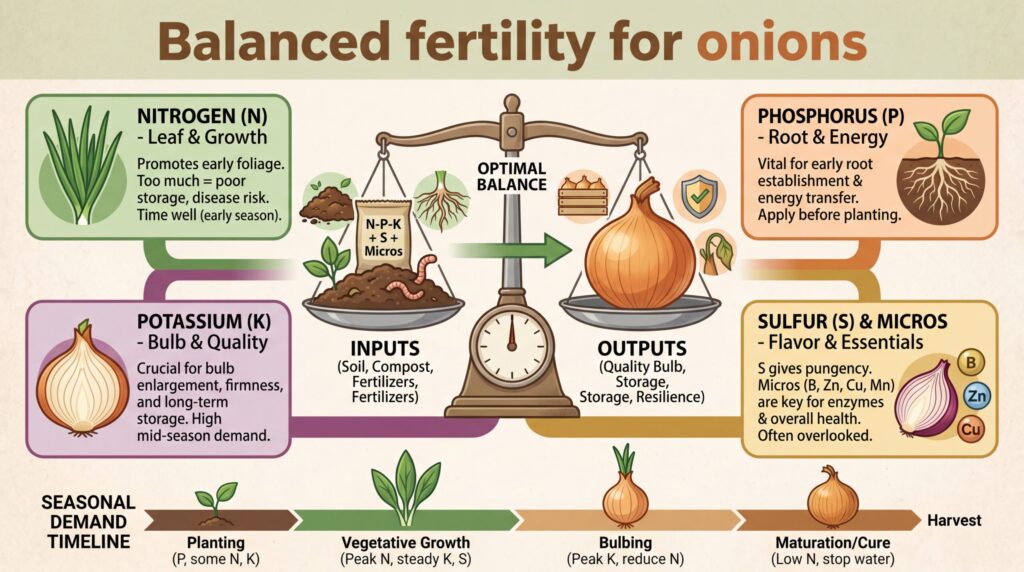
Balanced fertility encourages steady development without forcing excessive vegetative growth. Rotate crops (e.g., follow legumes) to naturally replenish nitrogen. Monitor leaf color: pale foliage signals nutrient shortfall, while dark green may indicate excess nitrogen.
Organic Pest and Disease Control
Common challenges include thrips, onion maggots, downy mildew, and botrytis. Organic onion farming techniques rely on prevention first: crop rotation, resistant varieties, and good airflow. For thrips, introduce beneficial insects such as ladybugs, and apply neem oil or insecticidal soap sprays at the first sighting. Row covers exclude onion maggot flies; beneficial nematodes target onion maggot larvae in the soil. For fungal issues, use copper-based fungicides sparingly as a last resort, in combination with cultural practices such as removing debris and avoiding wet foliage. Companion planting with carrots deters pests naturally.
Create your own natural sprays with household ingredients: How to make an Organic Pesticide at Home.
Weed Management Without Chemicals
Weeds compete for nutrients and light. In organic onion farming, shallow cultivation, hand weeding, and mulching form the core strategy. Apply 2–3 inches of organic mulch after plants reach 4–6 inches tall. This conserves moisture and blocks weed germination. Flame weeding or hoeing between rows works well early on. Cover crops in off-seasons suppress perennial weeds.
Harvesting, Curing, and Storage
Harvest when 50–80% of tops have fallen over and yellowed, typically 90–120 days after planting. Gently lift bulbs with a fork on a dry day to avoid bruising. In organic onion farming, curing is critical: lay bulbs in a single layer under cover for 1–2 weeks until the necks are tight and papery. Trim tops and roots, then store in mesh bags or crates. Properly cured onions last 6–12 months. Organic dried onions have a longer shelf life than the inorganic ones.
Challenges and Solutions in Organic Onion Farming
Common hurdles include variable weather and pest pressure. Solutions lie in diversification, continuous learning, and community networks. In variable climates, select adaptable varieties and use protective mulches or shade cloth. Record-keeping and soil-building practices mitigate long-term issues.
Advanced Tips for Higher Yields
Prune tops lightly if they become heavy to direct energy to bulbs. Use companion planting strategically. Experiment with no-till methods once soil health is established. Test biochar amendments for improved water retention in sandy soils. Join grower forums to exchange region-specific advice.
Environmental and Economic Benefits
These organic onion farming techniques reduce chemical runoff, enhance biodiversity, and sequester carbon in healthy soils. Economically, lower input costs over time and premium pricing create sustainable income. Studies show organic systems can match or exceed conventional yields after the transition period when managed well.
Common Mistakes to Avoid
Planting too deep, overwatering, or neglecting rotation rank among the top causes. Harvesting too early results in poor storage. Always prioritize prevention over cure.
Conclusion
In summary, mastering organic onion farming techniques transforms a simple crop into a profitable, eco-friendly venture. From soil preparation through harvest, each step builds on natural processes for superior results. Start small, observe closely, and refine your approach season after season. With dedication, these organic onion farming techniques will deliver abundant harvests while contributing to healthier soils and communities. Whether scaling commercially or gardening at home, the rewards—both financial and personal—are substantial. Implement these strategies today and watch your onion crop thrive naturally.
2 thoughts on “Organic Onion Farming Techniques: A Complete Step-by-Step Guide to High-Yield, Sustainable Onion Cultivation”