
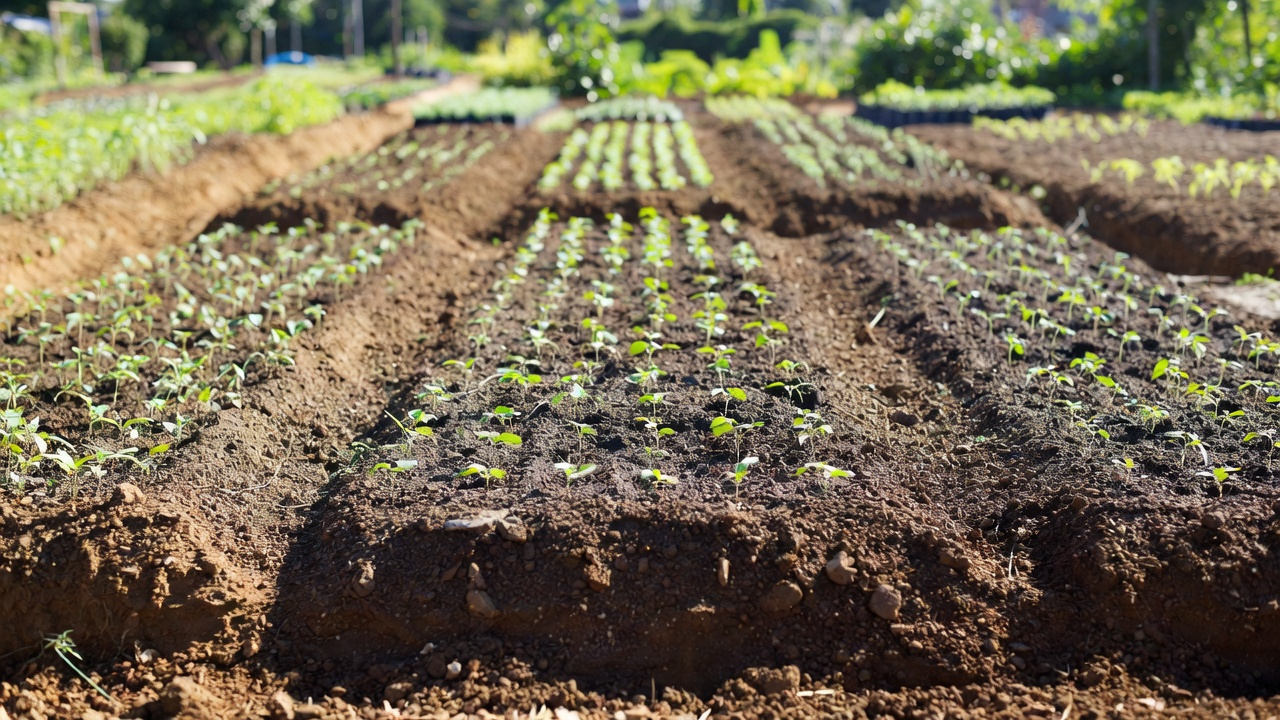
Preparation of the nursery bed is easy. Nursery beds can be prepared indoors, in a greenhouse, or outdoors, in the open field. The seeds can be propagated in pots or on the raised or sunken beds.
The size of a nursery bed can vary depending on the crop, the number of seedlings required, and the available space. However, for efficient management, a standard nursery bed is usually prepared with the following dimensions:
- Width: 1 meter
- Length: Up to 30 m or less
- Height: 15–20 centimeters above ground level
- Path between beds: 30–50 centimeters
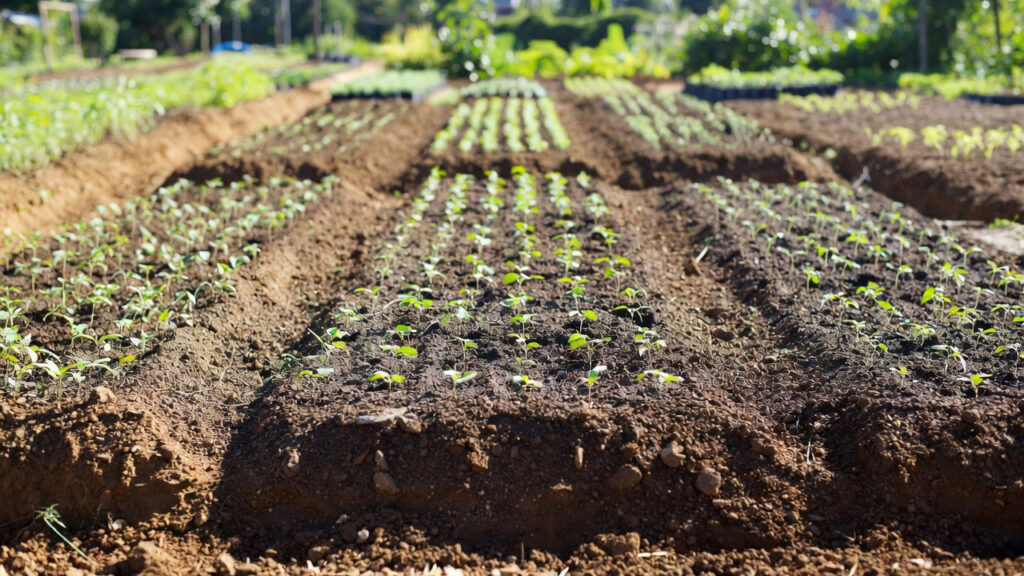
The width of 1 meter is recommended because it allows the farmer to reach the center of the bed easily from either side without stepping on the soil. Stepping on the bed may compact the soil, affecting root growth and seed germination.
The bed should be 30 meters or less in length. Beds that are too long can be difficult to manage, especially when watering, weeding, and sowing seeds. If you are using drip irrigation, the pressure may not be sufficient to supply water to a bed longer than 30m.
The bed is usually raised 15 to 20 centimeters above the ground to improve drainage and prevent waterlogging. Excess water can damage young seedlings by causing root rot and fungal diseases.
Paths between beds are necessary to allow easy movement when performing activities such as watering, weeding, and applying fertilizers.
Related: Making of Nursery and Seed Beds and Seed Propagation
Organic Matter in Bed Preparation
Before any seed is sown in the nursery bed, make sure that the soil has enough nutrients to support the growth of the seedlings. Organic matter, such as compost or well-decomposed manure, should be added to the soil.
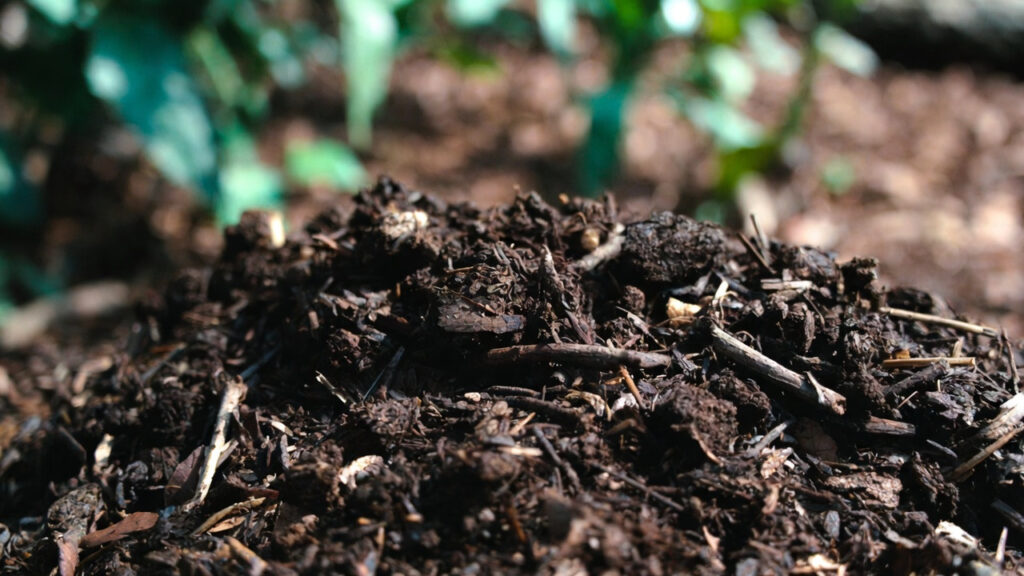
Organic matter provides several benefits as follows
- It increases soil fertility by adding nutrients.
- It improves soil structure and texture.
- It enhances water retention.
- It encourages beneficial microorganisms in the soil.
Forming the Raised Nursery Bed
After the soil has been prepared, enriched and amended with organic matter, the next step is forming the nursery/seedling beds.
The farmer should measure the bed using sticks and string to ensure the correct dimensions. The bed should be 1 meter wide and up to 30 meters long.
Soil is then gathered and shaped to create a raised bed about 15 to 20 centimeters high. This improves drainage and protects seedlings from waterlogging.
Paths of about 50 centimeters wide should be left between beds to allow easy access during nursery management activities.
Leveling and Smoothing the Bed
Once the nursery bed has been formed, level the surface with a rake.
Leveling is important because it ensures the uniform distribution of seeds and water. If the bed surface is uneven, water may accumulate in some areas while other parts remain dry.
The bed should also be smoothed to remove any remaining stones, roots, or large soil particles.
A smooth and level surface provides the best conditions for seed germination.
Watering the Nursery Bed
Before sowing seeds, the nursery bed should be watered thoroughly. This helps moisten the soil and prepare it for seed germination.
The soil should be moist but not waterlogged. Too much water can cause seeds to rot, while too little water may prevent germination.
Watering should be done gently using watering cans or drip irrigation systems to avoid washing away seeds or disturbing the soil surface.
Regular watering is required after sowing seeds to maintain adequate moisture levels.
Seed Sowing in the Nursery Bed
Seeds can be sown in the nursery bed using different methods.
One common method is row sowing, where shallow furrows are made across the bed at equal distances. Seeds are placed in the furrows and lightly covered with soil.
Another method is broadcasting, where seeds are scattered evenly over the bed surface. However, row sowing is usually preferred because it allows easier management of seedlings.
After sowing, the seeds should be lightly covered with fine soil and watered gently.
Mulching
Mulching involves covering the nursery bed with materials such as dry grass, straw, or leaves after sowing seeds. It helps to:
- Retain soil moisture
- Protect seeds from heavy rain
- Maintain soil temperature
- Reduce soil erosion
Shading the Nursery Bed
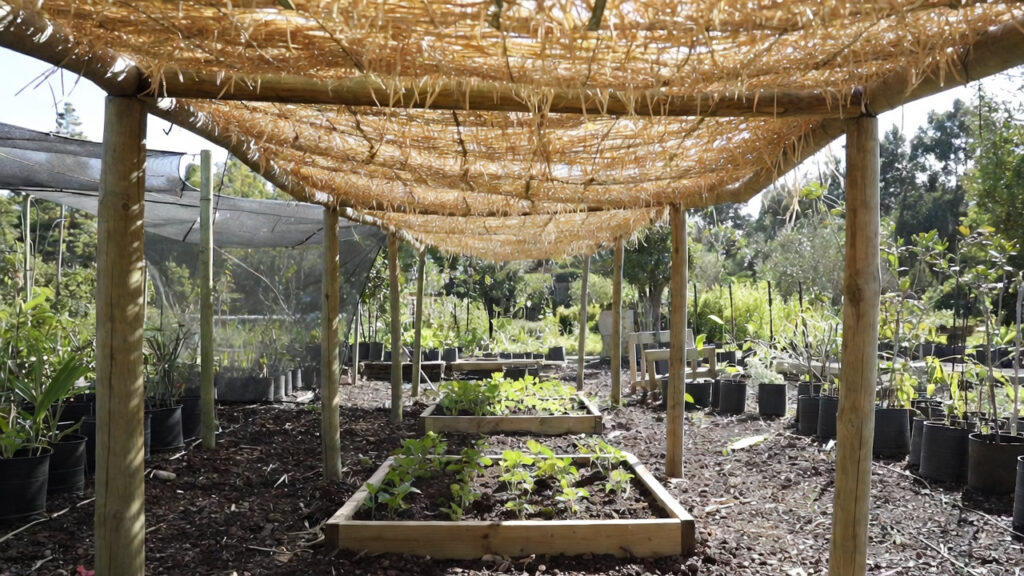
Young seedlings are sensitive to intense sunlight and heavy rainfall. To protect them, gardeners should construct temporary shade structures using materials such as:
- Grass
- Palm leaves
- Banana leaves
- Shade nets
Shading helps reduce heat stress and prevents seedlings from drying out. The shade should be removed gradually as the seedlings grow stronger.
Nursery Bed Management
Success in gardening depends on Proper management of the nursery bed. The following are the key areas of nursery management.
Watering
Regular watering is key for any success of the nursery bed. Seedlings should be watered regularly ensuring that the bed is wet always without being overclogged.
Weeding
Weeds should be removed as soon as they appear to prevent competition for nutrients and water.
Pest and Disease Control
Gardeners should monitor the nursery regularly for signs of pests or diseases and take appropriate control measures immediately
Related: Organic Pest Control: How to Protect Your Garden Without Poisoning the Planet
Thinning
Remove any excess seedlings in the nursery to give room for the rest to thrive and be strong.
Hardening off Seedlings
Hardening off involves gradually exposing seedlings to outdoor conditions by reducing watering and removing shade. This helps seedlings adapt to the harsher conditions of the main field.
The process usually takes about 7 to 10 days.
Transplanting Seedlings
Seedlings are ready for transplanting when they reach the appropriate size and have developed several true leaves.
Transplanting should be done during the early morning or late afternoon to reduce stress on the plants.
Seedlings should be carefully removed from the nursery bed with some soil attached to their roots and planted in the prepared field.
Conclusion
For a deeper look at what goes into setting up a nursery from scratch, read our full guide on making nursery and seed beds and seed propagation.”
1 thought on “Preparation of Nursery and Seedling Beds”