
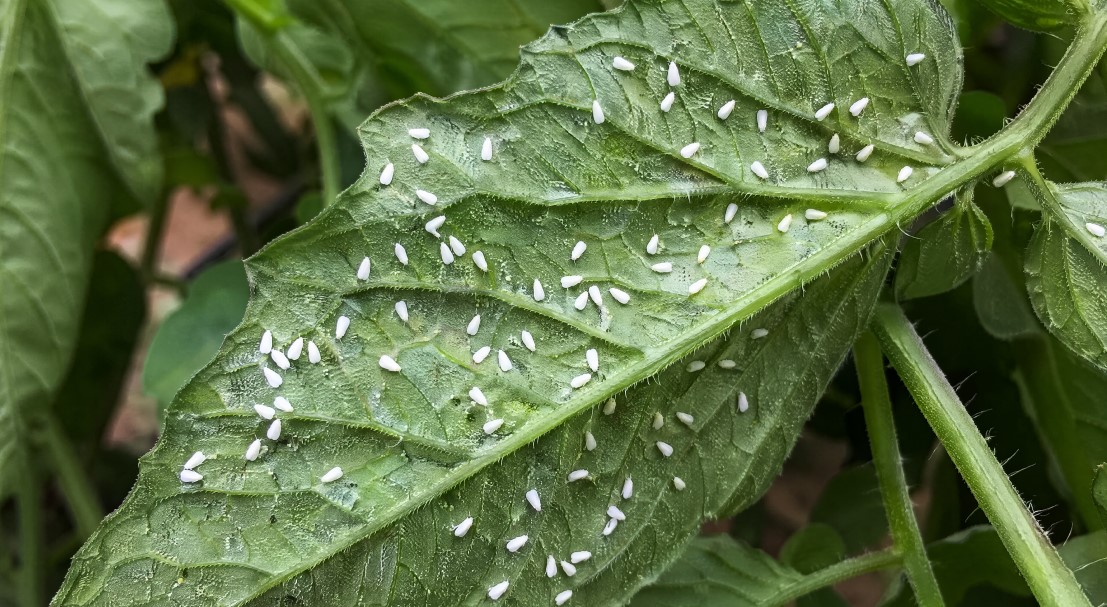
Whiteflies on tomatoes are among the most common and dangerous pest problems in organic gardens. They quietly drain plant sap and spread sticky honeydew. Sometimes they carry damaging viral tomato diseases such as Tomato Yellow Leaf Curl Virus. In this guide, we’ll walk through 7 proven, natural methods to prevent and destroy whitefly infestations. The methods used ensure the safety of your garden pollinators, beneficial insects, and your family.
This article builds on the disease and pest management approach we’ve covered throughout the site. If you’re just getting started with tomatoes, it’s worth first reading our Ultimate Guide to Organic Tomato Gardening, which lays the foundation for healthy, resilient plants that are naturally more resistant to pest pressure.
What Are Whiteflies?
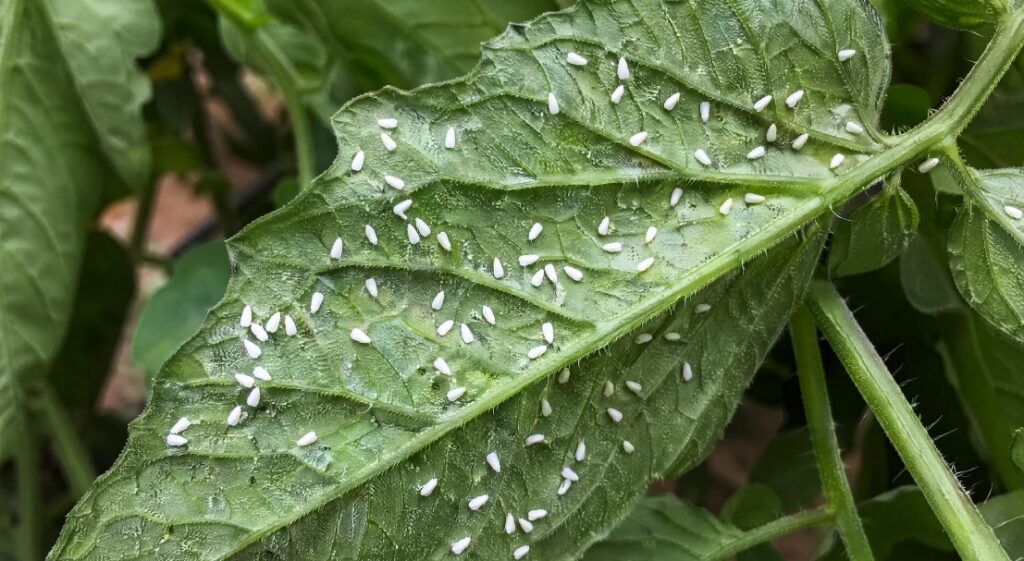
Whiteflies are tiny, moth-like insects that cluster on the undersides of tomato leaves. They feed by piercing leaf tissue and sucking out plant sap, which weakens the plant gradually over the course of the season.
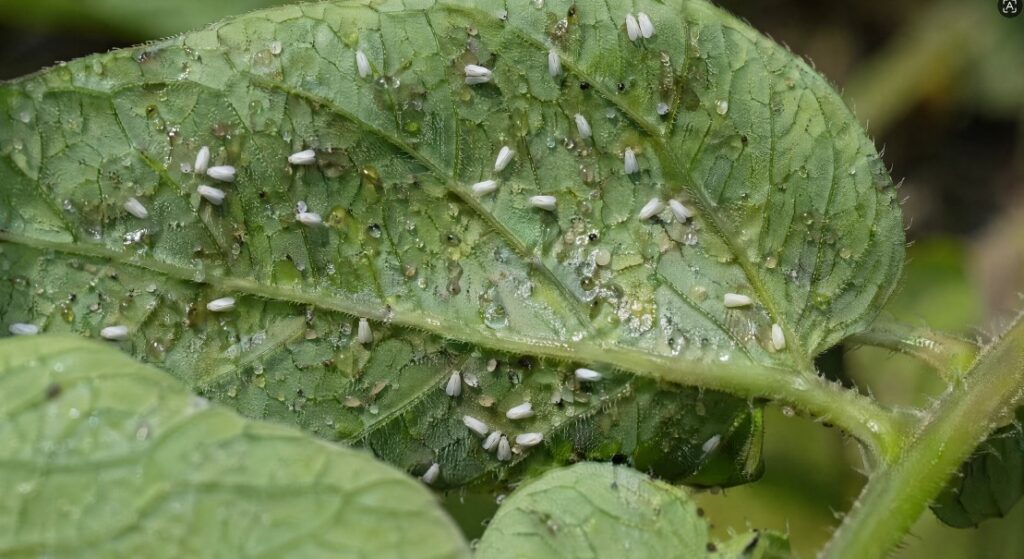
As whiteflies keep feeding, they excrete honeydew, which is a sticky substance that coats leaves and fruit and encourages the growth of black sooty mold, which blocks sunlight from reaching the leaf surface, thereby reducing the plant’s ability to photosynthesize and produce a strong yield. Whiteflies on tomatoes are known vectors for several damaging plant viruses, most notably Tomato Yellow Leaf Curl Virus (TYLCV), which can stunt growth, distort fruit, and devastate your healthy crop within days.
As a gardener, you’ll agree with me that pest pressure and disease pressure often go hand in hand. We’ve covered several of these issues in depth, including Early Blight of Tomatoes, Tomato Bacterial Spot, and Understanding Tomato Mosaic Virus. A tomato plant already stressed by disease is far more vulnerable to a whitefly infestation, which is why a whole-garden approach matters so much when tackling whiteflies on tomatoes.
The Life Cycle of Whiteflies: Why Timing Matters
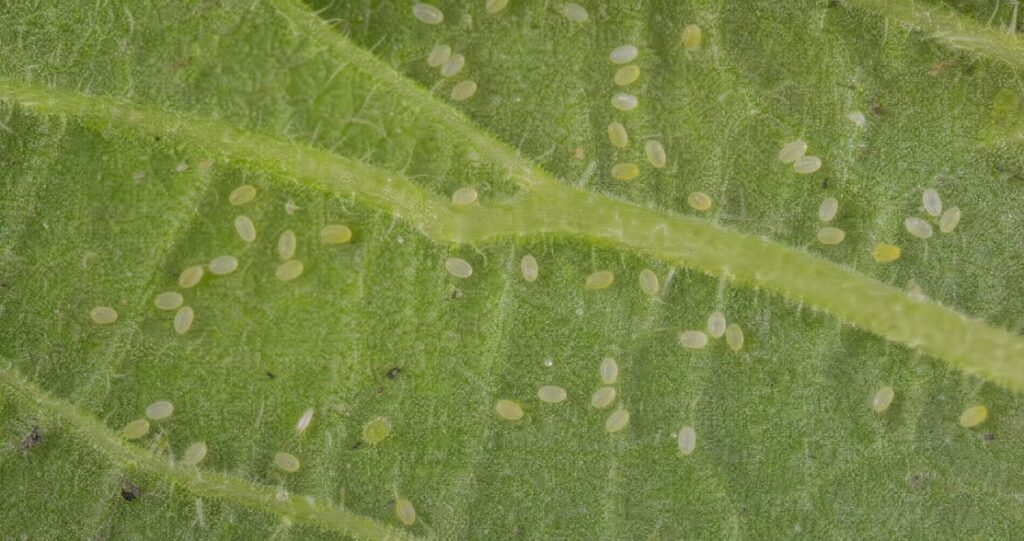
Understanding the whitefly life cycle is one of the most overlooked keys to effective control. A female whitefly can lay several hundred tiny eggs on the undersides of young leaves over her lifetime. These eggs hatch into flat, immobile nymphs that attach themselves to the leaf and begin feeding immediately, passing through several growth stages before reaching adulthood in as little as two to four weeks under warm conditions.
This rapid life cycle is exactly why populations of whiteflies on tomatoes can explode so quickly once conditions are favorable. The favorable conditions or whiteflies explosion include: warm temperatures, high humidity, and crowded plantings. It also explains why a single round of spraying is rarely enough. It is for this reason that most organic treatments need to be repeated on a schedule that accounts for new generations hatching every couple of weeks. Timing your interventions around this cycle, rather than reacting only when you spot a visible cloud of adults, dramatically improves your results.
How to Identify Whiteflies on Tomato Plants
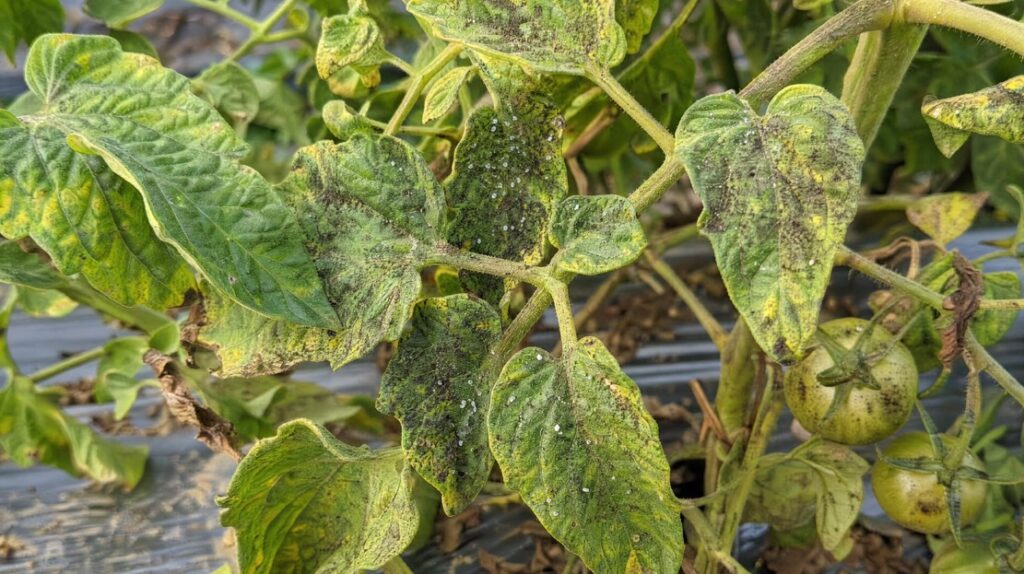
The clearest way to identify whitefly infestation is the telltale cloud of tiny insects that flutter up when you disturb the foliage, especially during the cooler parts of the day. Other symptoms include:
- Yellowing, curling, or wilting leaves, especially on the lower parts of the plant
- Sticky honeydew residue on leaves and fruit
- Black sooty mold developing on the honeydew
- Tiny white, oval eggs or flattened nymphs visible on the undersides of leaves when inspected closely
- Stunted growth or reduced fruit set
Why an Organic Approach Works Best
While chemical control may seem like the fastest way to fix the whitefly problem, it poses a danger to the bees, ladybugs, and other beneficial insects that your garden depends on. Many synthetic insecticides are non-selective, meaning they kill pollinators and predatory insects right alongside the whiteflies they’re meant to target. Choosing an organic approach from the start avoids that trap entirely, and it keeps your soil, fruit, and surrounding ecosystem free of synthetic residues.
Method 1: Yellow Sticky Traps
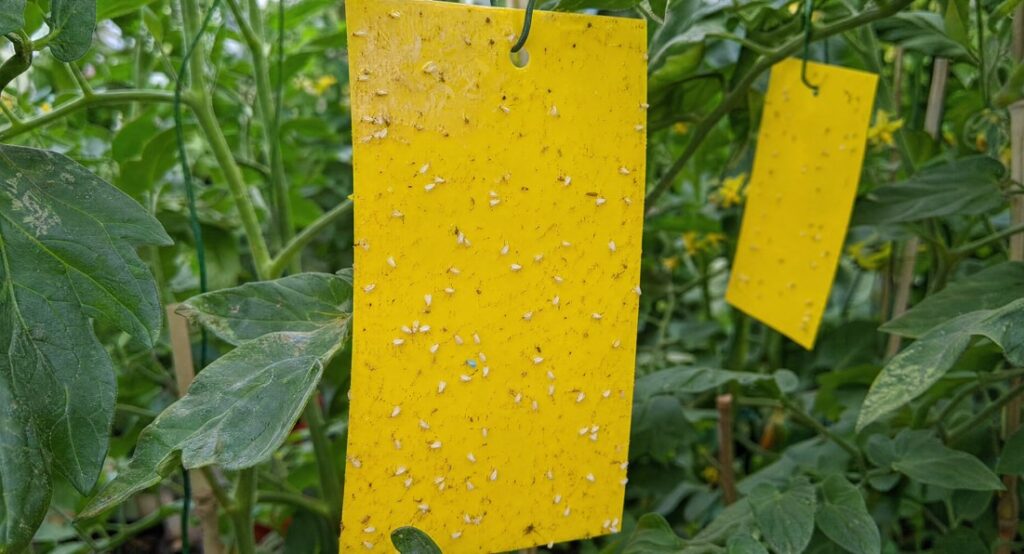
Whiteflies are strongly attracted to the color yellow, which makes yellow sticky traps one of the simplest and most effective tools for both detection and organic whitefly control. Hang the traps just above the canopy of your tomato plants, spacing them every few feet throughout the garden bed so you get even coverage across the whole planting.
Method 2: Neem Oil Spray
Neem oil is one of the most versatile tools in any organic gardener’s arsenal, and it is highly effective against whiteflies. This oil works by disrupting the insect’s hormone system, which interferes with feeding, growth, and reproduction, making it especially useful against nymphs that are often harder to reach with contact-only sprays.
Neem oil also has mild antifungal properties, which make it a nice complement to other organic treatments such as Baking Soda for Fungal Infections. Rotating neem oil with other organic sprays also helps prevent resistance from building up in a persistent whitefly population, keeping your long-term results more consistent season after season.
Method 3: Insecticidal Soap
The fatty acids in insecticidal soap break down the outer protective layer of the insect’s body, causing dehydration and death within hours, without leaving harmful residues on your fruit or soil.
Because insecticidal soap only works on direct contact, thorough coverage is essential — spray both the tops and undersides of every leaf, paying close attention to new growth where whiteflies often prefer to feed and lay eggs. As part of a broader natural pest management plan, insecticidal soap should be reapplied regularly for lasting results against a persistent infestation.
If you’d rather make your own spray at home using ingredients from your kitchen, our guide on How to Make an Organic Pesticide at Home walks through a simple garlic, onion, and aloe vera-based recipe that many gardeners use as an additional layer of defense.
Method 4: Encourage Beneficial Insects
One of the most sustainable long-term strategies is to build a garden ecosystem that supports the natural predators of whiteflies. The University of California extension article states that Ladybugs, lacewings, and tiny parasitic wasps such as Encarsia formosa are all highly effective at keeping populations in check, often providing better long-term organic whitefly control than any spray alone ever could.
To attract these beneficial insects, plant flowering herbs like dill and yarrow near your tomato beds. Once beneficial insects are established in your garden, give nature time to do the work, which often produces the most stable results over a full growing season.
Method 5: Companion Planting
Companion planting is a time-tested organic strategy that can meaningfully reduce pest pressure before it starts. Marigolds are especially effective, as their strong scent repels many flying pests while also attracting the same beneficial insects that prey on whiteflies. Basil, chives, and nasturtiums are also commonly used as companion plants around tomatoes for similar reasons, and many gardeners plant them in alternating rows for both pest control and pollinator support.
If you’re growing a diverse organic garden, this same principle applies well beyond tomatoes. We’ve written about companion strategies in our Complete Guide to Organic Onion Growing as well, since alliums like onions and garlic are known to help repel several common garden pests when interplanted with vegetables. A diverse planting layout not only helps prevent whiteflies on tomatoes but also builds a more resilient garden overall, reducing your reliance on sprays of any kind.
Method 6: Pruning, and Garden Sanitation
Remove and destroy heavily infested leaves rather than composting them, since whitefly eggs and nymphs can survive and re-infest your garden if returned to an active compost pile. Regular garden sanitation, including clearing weeds, removing plant debris at the end of the season, and avoiding overcrowded plantings, also limits the alternative host plants and hiding spots that allow whiteflies to persist and re-emerge between growing seasons.
Conclusion
Whiteflies on tomatoes are frustrating, but they’re also very manageable once you understand their life cycle and have a toolkit of natural methods ready to go. Start with prevention: sticky traps and companion planting, then layer in targeted sprays and beneficial insects as needed. Combined with the broader disease-prevention strategies we’ve covered elsewhere on the site, like our guides to Bacterial Speck and Bacterial and Fungal Leaf Spot, a consistent, chemical-free approach will keep your garden healthy and productive season after season.