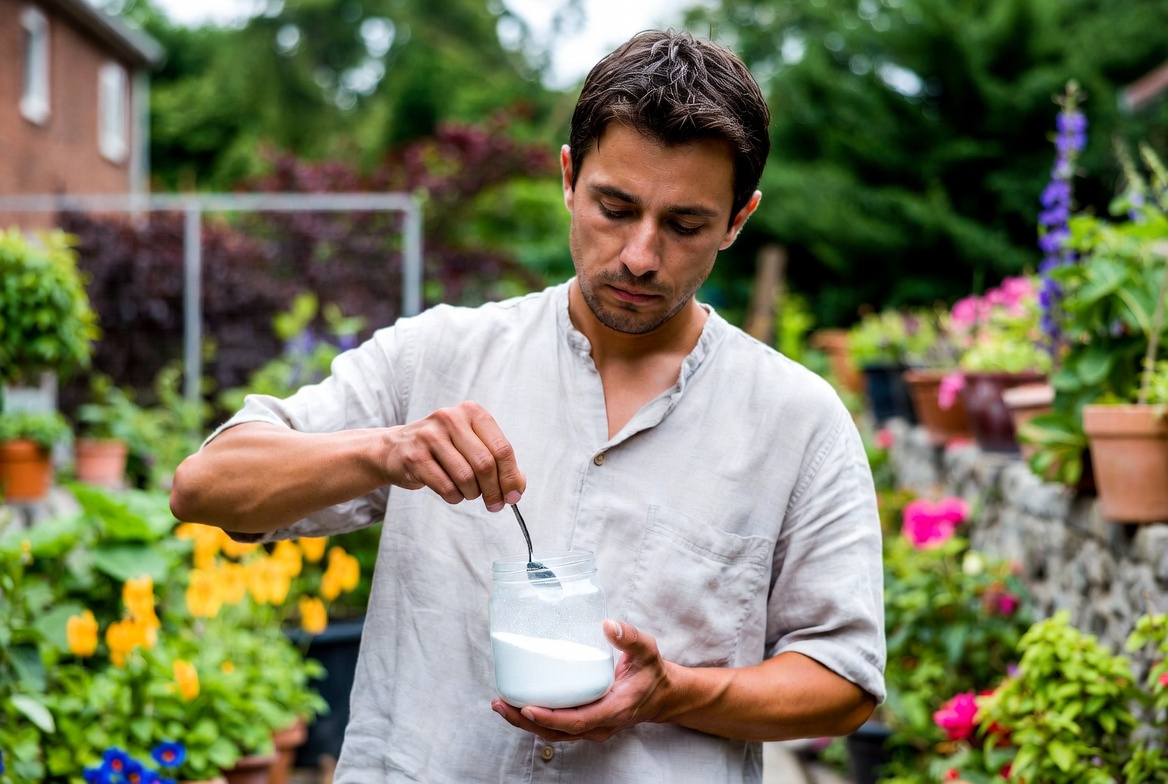
When I began to set up my organic garden one year ago. I discovered that our soil was very poor. As a result, many of our crops did not thrive so well. During this time, I started using baking soda as the fungal infection control in my garden. Our crops ended up doing better than we thought before. Why baking soda?
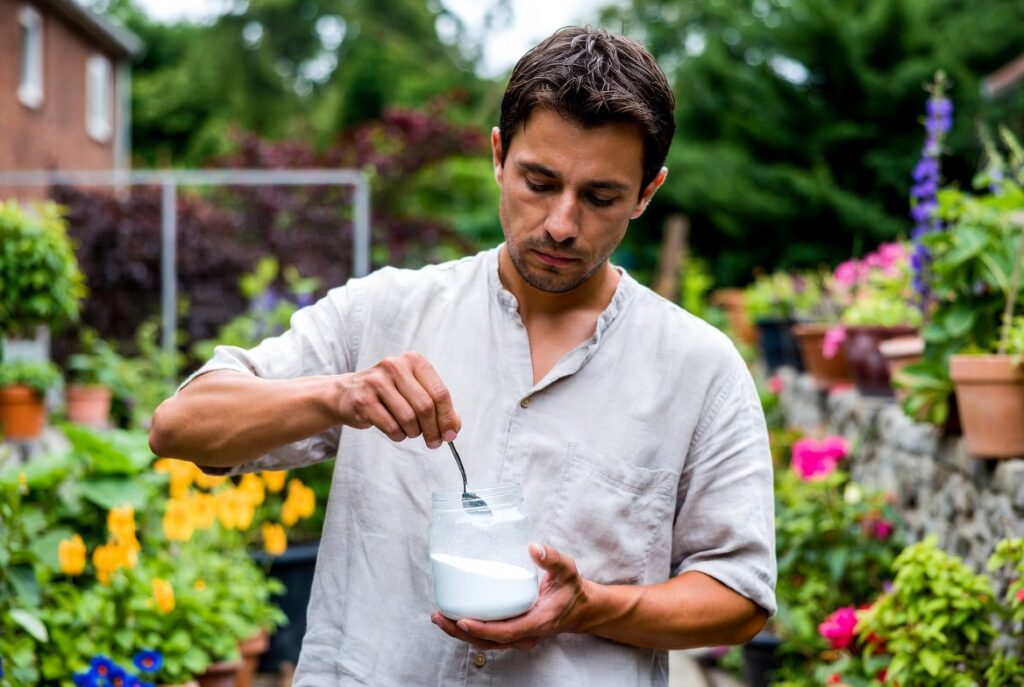
What research says
According to research, sodium bicarbonate commonly known as baking soda has been found to significantly reduce the early blight incidences.
In addition , Baking soda did well against fungal activity in potato dry rot, tomato leaf spot and grape gray mold. Other fungal infections that can be managed by baking soda include:
- Powderly mildew and
- black spot
How does Baking Soda work?
When Baking soda is mixed with water, it can inhibit the growth of fungal spores by altering the pH on the surface of plant leaves. In thus doing, the non-conducive environment for fungal growth is created thus reducing the fungal infestation.
Baking soda is generally considered a preventive measure rather than a curative one—it works best when applied early or before fungal infections become severe.
Advantages of Using Baking soda over inorganic fungicides.
Baking soda has many advantages as a fungicide over conventional inorganic fungicides. The following are some advantages.
- Baking Soda is Non-Toxic. A benefit that every gardener should boast of
- It is cheap compared to most inorganic fungicides
- It is readily available and Inexpensive
- Organic Gardening Compatible
- It is Effective Against Certain Fungi
- Crops can be harvested immediately after spraying without any danger of intoxication
Limitations of using baking soda for fungi control
While baking soda has advantages, it is not a cure-all. The following are the limitations.
- Not effective against all fungal pathogens.
- Needs to be applied early for prevention than for treatment
- May cause leaf burn if used in high concentrations or under strong sunlight.
- It requires regular reapplication to keep it effective
Comparison table between baking soda and other inorganic fungicides
| Feature | Baking Soda | Inorganic Fungicides |
|---|---|---|
| Environmental Impact | very low | Always high |
| Toxicity to the environment | very minimal | Moderate to high |
| Cost | Very low | Moderate to high |
| Organic Certification | Often allowed | Generally restricted |
| Risk for resistance | Low to no resistance | Medium to high |
| Frequency of application | Frequent most of the time | Less frequent to more frequent depending on the area |
How to Use Baking Soda for Fungus on Plants
It is worthwhile to note that baking soda is completely non-toxic for mammals, and is readily available in any grocery store, and inexpensive. This is how to use it.
- Dissolve one teaspoon of baking soda into 1-2L of water.
- Add a few drops of liquid soap to help the solution stick to the leaves.
- Thoroughly Stir this mixture and then pour it into a clean spray bottle.
- Spray the plant, both the upper and lower leaves, and let the plant dry.
- Repeat the application as may be needed.
Conclusion
In conclusion, baking soda, also known as sodium bicarbonate, stands out as a safe, cost-effective, and environmentally friendly tool for managing common fungal infections in plants, particularly powdery mildew, black spot on roses, and early blight on tomatoes. This humble kitchen ingredient empowers home gardeners and organic growers to protect their plants without relying heavily on synthetic fungicides, offering a gentle yet effective first line of defense against many foliar fungal diseases.
1 thought on “Baking Soda For fungal Infections”